
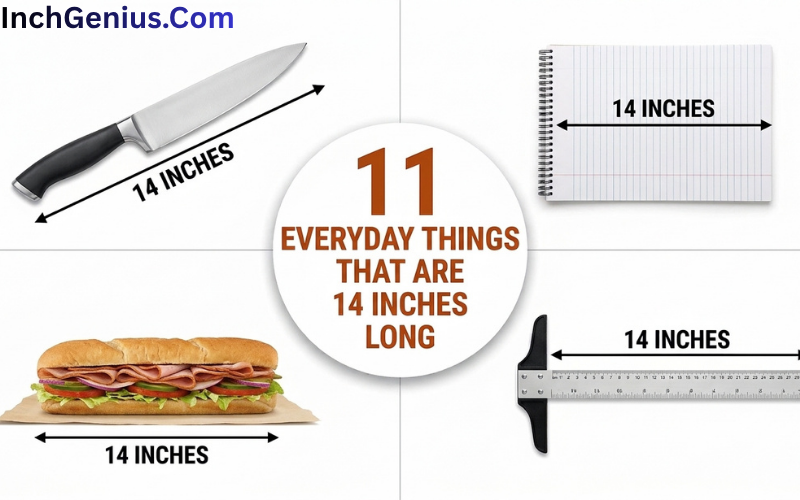
When you need to measure something without a ruler, comparing it with a familiar object can make the job much easier. If you have been wondering how long is 14 inches, it is equal to 1 foot and 2 inches, or 35.56 centimeters. This length is large enough to picture using everyday household items, craft supplies, and common objects with similar dimensions.
Although 14 inches may sound like an ordinary measurement, it can be difficult to estimate accurately by sight alone. A useful way to understand it is to compare it with objects you can find around your home, in a workshop, or at a stationery store. Some items are manufactured close to this length, while others are available in different sizes, so checking their dimensions is important when accuracy matters.
In this guide, you will learn what 14 inches looks like, how it compares with other units, and which everyday objects can help you visualize this length.
How Long Is 14 Inches?
14 inches is equal to 1 foot and 2 inches, 35.56 centimeters, or 355.6 millimeters. It is approximately 0.356 meters.
A simple way to picture this measurement is to imagine a 12-inch ruler with another 2 inches added to its end. The total length is 14 inches.
Here are the main conversions:
| Measurement Unit | Equivalent |
| Inches | 14 inches |
| Feet | 1.167 feet |
| Feet and inches | 1 foot 2 inches |
| Centimeters | 35.56 cm |
| Millimeters | 355.6 mm |
| Meters | 0.3556 m |
| Yards | 0.389 yards |
What Does 14 Inches Look Like?
Fourteen inches is slightly longer than a standard 12-inch ruler. Imagine placing two extra inches beyond the ruler’s end. That additional section may not seem large, but it makes the overall length noticeably longer.
Another way to visualize 14 inches is to compare it with a medium-sized household item, a long craft component, or a tool handle measuring approximately 35.6 centimeters. These comparisons can help you develop a practical sense of the measurement without needing to carry a ruler everywhere.
Keep in mind that an object’s height, width, and length are different measurements. A product that is 14 inches tall may not be 14 inches long when laid horizontally. Always compare the specific dimension you need.
Quick Comparison
| Reference | Measurement |
| A 12-inch ruler plus 2 inches | 14 inches |
| One foot | 12 inches |
| Additional length beyond one foot | 2 inches |
| Centimeters | 35.56 cm |
| Millimeters | 355.6 mm |
| Half of 14 inches | 7 inches |
| Double 14 inches | 28 inches |
14 Inches Conversion Chart
Use this chart to compare 14 inches with other common inch measurements.
| Inches | Centimeters | Millimeters | Feet |
| 1 inch | 2.54 cm | 25.4 mm | 0.0833 ft |
| 2 inches | 5.08 cm | 50.8 mm | 0.1667 ft |
| 4 inches | 10.16 cm | 101.6 mm | 0.3333 ft |
| 6 inches | 15.24 cm | 152.4 mm | 0.5 ft |
| 8 inches | 20.32 cm | 203.2 mm | 0.6667 ft |
| 10 inches | 25.4 cm | 254 mm | 0.8333 ft |
| 12 inches | 30.48 cm | 304.8 mm | 1 ft |
| 14 inches | 35.56 cm | 355.6 mm | 1.1667 ft |
| 16 inches | 40.64 cm | 406.4 mm | 1.3333 ft |
| 18 inches | 45.72 cm | 457.2 mm | 1.5 ft |
| 24 inches | 60.96 cm | 609.6 mm | 2 ft |
11 Everyday Things That Are About 14 Inches Long
You do not always need a measuring tape to get a rough idea of 14 inches. Several household, hobby, and workshop items can provide useful comparisons. The following examples focus on less predictable objects rather than relying entirely on the usual paper, phone, or kitchen-item comparisons.
Important: The dimensions below describe suitable examples or target sizes, not universal measurements for every product. Check the actual item before treating it as an exact 14-inch reference.
| No. | Object | Approximate Length | Why It Helps |
| 1 | Long quilting ruler | 14 inches | A ruler made specifically in this length gives a direct comparison |
| 2 | Miniature architectural scale model base | 14 inches | Some model bases are cut to a 14-inch length |
| 3 | Short macramé dowel | 14 inches | A wooden dowel of this size provides a straight, easy-to-visualize reference |
| 4 | Craft foam board strip | 14 inches | A strip cut to this length is useful for art and DIY projects |
| 5 | Replacement drawer-slide rail section | 14 inches | Certain rail components are sold in lengths around 14 inches |
| 6 | Small embroidery frame’s longest side | 14 inches | Rectangular frames may have a long side close to this measurement |
| 7 | Model railway track section | 14 inches | Some layouts use custom track sections cut or assembled to this length |
| 8 | Narrow shelf support bar | 14 inches | Short metal or wooden supports can be made to this dimension |
| 9 | Leatherworking strap blank | 14 inches | A cut strap of this length can be used for craft and repair projects |
| 10 | Aquarium tool handle | 14 inches | Some long-handled cleaning tools are designed around this length |
| 11 | Replacement blind slat | 14 inches | Custom window-blind components can be cut to a specified length |
A 14-Inch Quilting Ruler
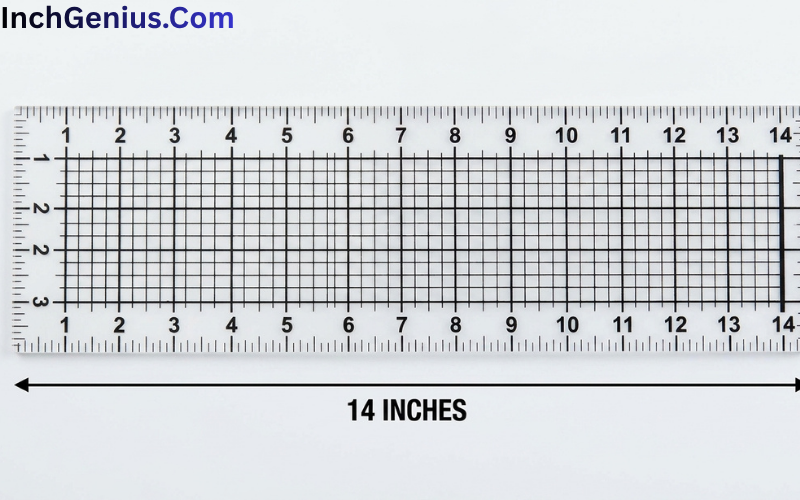
A long quilting ruler is one of the most useful ways to understand a 14-inch measurement. Unlike a flexible measuring tape, a rigid ruler gives you a straight edge that is easy to compare with other objects.
Quilting rulers come in many dimensions, including rectangular models with a 14-inch side. When selecting one, check the printed product specifications because not every quilting ruler measures 14 inches along its longest edge.
This is particularly useful for fabric cutting, patchwork, and other projects where a small measuring error can affect the final result.
A Miniature Architectural Model Base
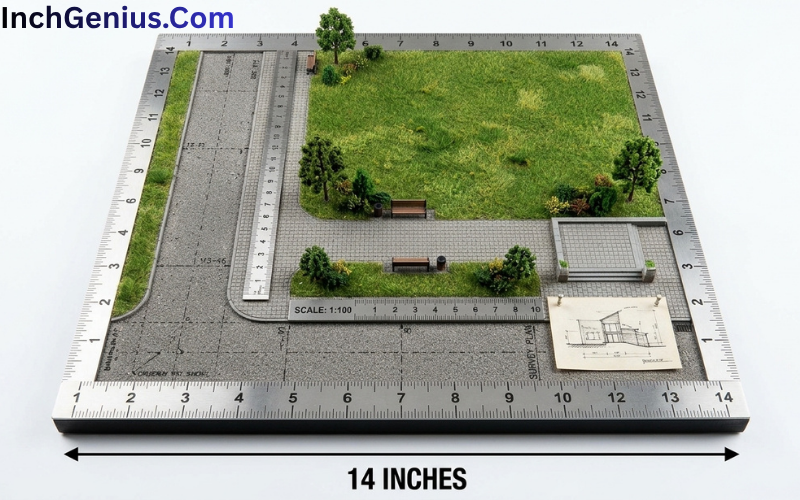
Architectural models are often built on wooden, plastic, or foam bases cut to specific dimensions. A base measuring 14 inches along one side gives you a clear example of the length.
For instance, a hobbyist might choose a 14-inch-long base to display a small building, a street scene, or a landscape model. The width can be different, so focus on the longer side when making your comparison.
This example is also useful for understanding measurements in model-making, where plans often use precise dimensions.
Related Post: How Long is 13 Inches
A Craft Foam Board Strip
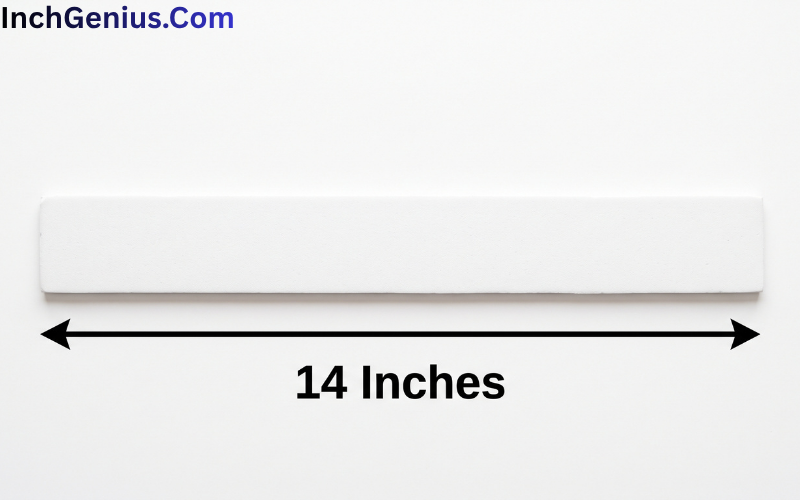
Foam board is commonly used for school projects, display models, handmade signs, and lightweight prototypes. You can cut a strip from a larger board so that it measures exactly 14 inches.
This makes it a convenient example because you can create the reference yourself rather than depending on a manufactured product’s standard dimensions.
Place the strip flat on a table and compare it with a 12-inch ruler. The foam strip should extend 2 inches beyond the ruler when both are aligned at the same starting point.
A Drawer-Slide Rail Section
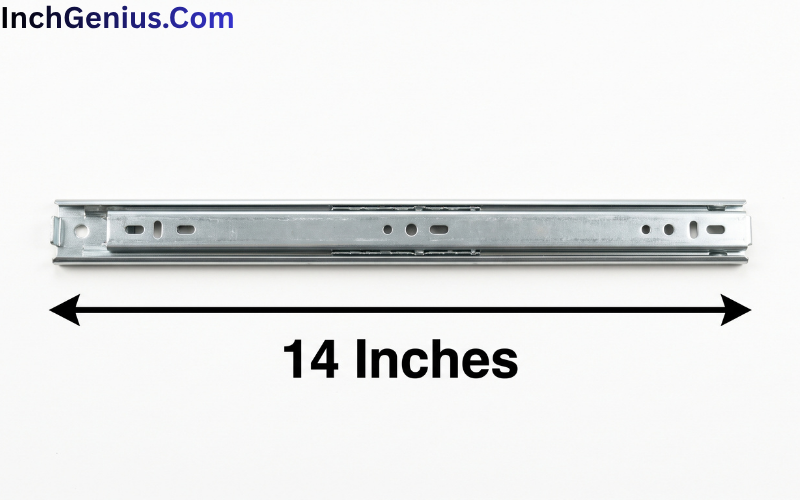
Drawer-slide systems use metal rails to help drawers open and close smoothly. Different cabinets require different slide lengths, and some replacement components or rail sections may measure around 14 inches.
The important detail is to distinguish the rail’s physical length from the depth of the cabinet or the advertised drawer-slide size. Those dimensions are not always interchangeable.
If you have a spare rail at home, check its full end-to-end length. A component that measures 14 inches provides a practical comparison for this measurement.
A Rectangular Embroidery Frame
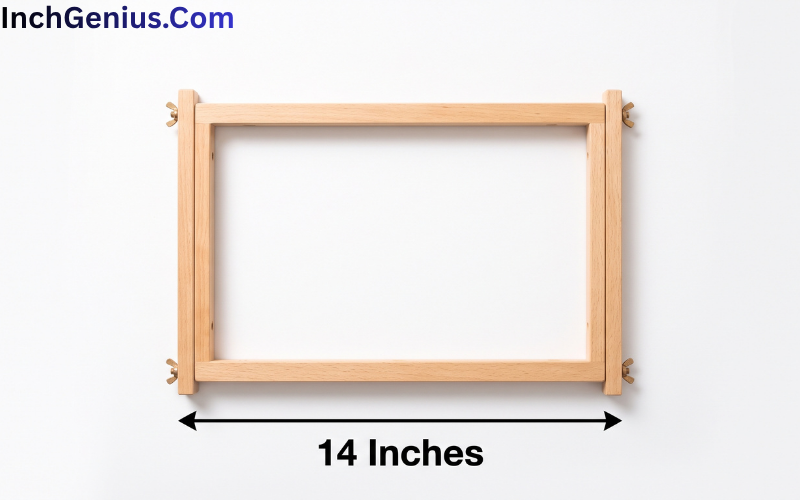
Embroidery frames hold fabric in place while you stitch. Some rectangular frames have a longer side close to 14 inches, making them helpful for visualizing this length.
Unlike a round embroidery hoop, a rectangular frame provides a clear straight edge. You can compare that side with the length of a ruler or measuring tape.
Frame sizes vary between manufacturers, so use the longest side only when its actual measurement is close to 14 inches.
A Model Railway Track Section
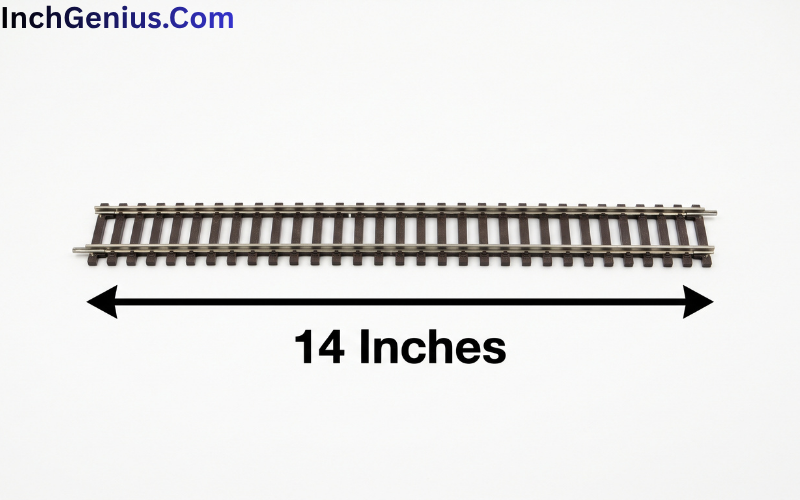
Model railway enthusiasts often assemble layouts from individual track sections, flexible rails, and custom-cut components. Depending on the scale and design, a straight section or assembled piece can be made to measure 14 inches.
This example works best for a custom section rather than assuming that every model railway track piece has the same length.
A 14-inch track section is useful as a visual reference because it has a long, narrow shape that makes its overall length easy to see.
Related Post: How Long is 15 Inches
A Narrow Shelf Support Bar
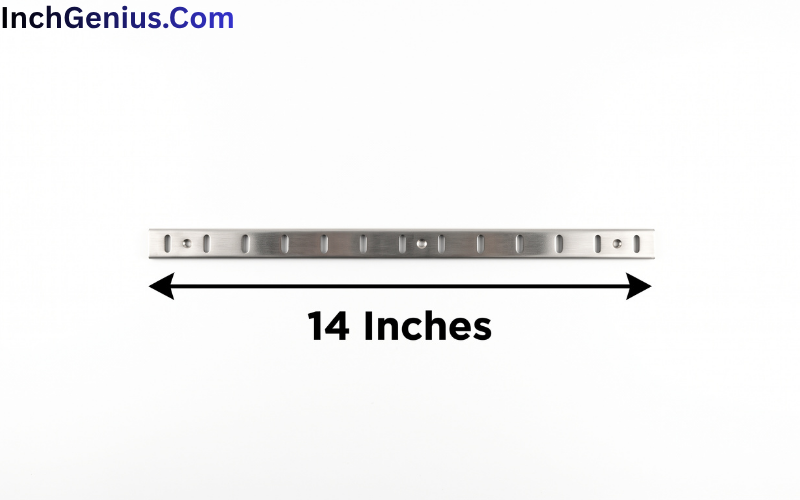
Shelf support bars and small structural braces are available in different lengths for furniture, cupboards, and DIY storage projects. A bar cut to 14 inches is a useful example of a straight object with this measurement.
Metal supports are particularly easy to compare against a ruler because their ends provide clear starting and ending points.
Do not confuse the bar’s length with the width of the shelf it supports. A shelf may be much longer or shorter than its support components.
A Leatherworking Strap Blank
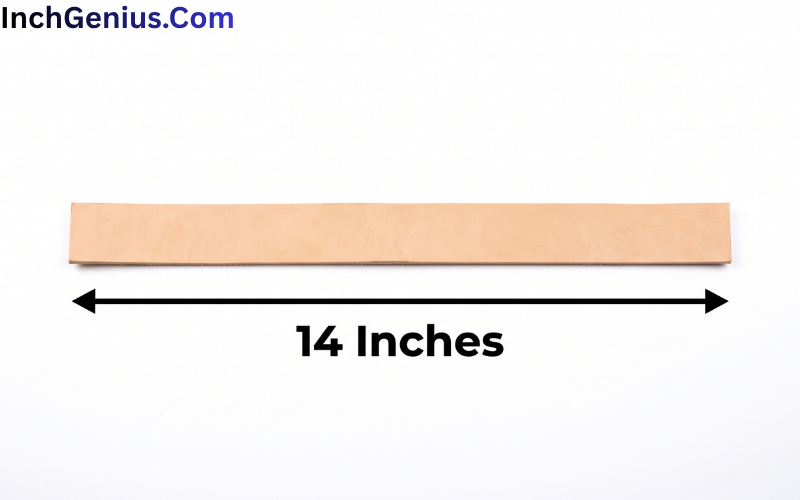
Leatherworkers often cut strap blanks for belts, handles, small bags, and decorative projects. A piece cut to 14 inches gives a flexible example of this length.
Unlike a rigid wooden rod, a leather strap can bend, so lay it flat and measure from one end to the other along its full length.
This is a useful reference for people interested in sewing, leather crafts, and small handmade accessories. Remember that a strap’s finished length can change if it is folded, stitched, or fitted with hardware.
Related Post: How Long is 12 Inches
An Aquarium Cleaning Tool Handle
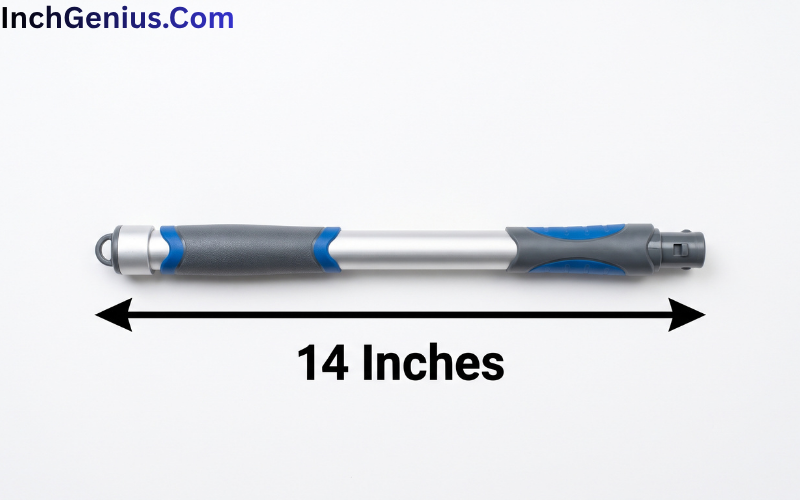
Some aquarium maintenance tools have extended handles to help users reach into a tank without putting their hands too far into the water. Depending on the design, certain tools or replacement handles may measure close to 14 inches.
The handle itself is the relevant dimension here, not the total length of the tool’s head, blade, or attachment.
Check the product’s specifications before using it as a measuring reference. Aquarium tools vary considerably in size and design.
A Replacement Window-Blind Slat
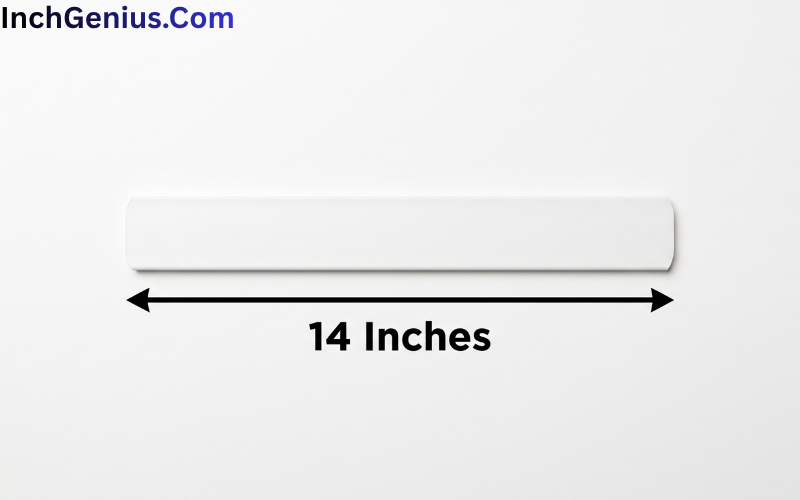
Window blinds use slats that can be made from wood, plastic, aluminum, or composite materials. In custom installations, individual slats may be cut to a specific length, including 14 inches.
This example is especially useful if you have blinds with short horizontal slats. Measure one slat from end to end while it is removed or fully accessible.
Be careful not to confuse slat length with slat width. A blind slat that is 14 inches long may be only a small fraction of that dimension in width.
Related Post: How Long is 17 Inches
A Woodworking Jig Fence
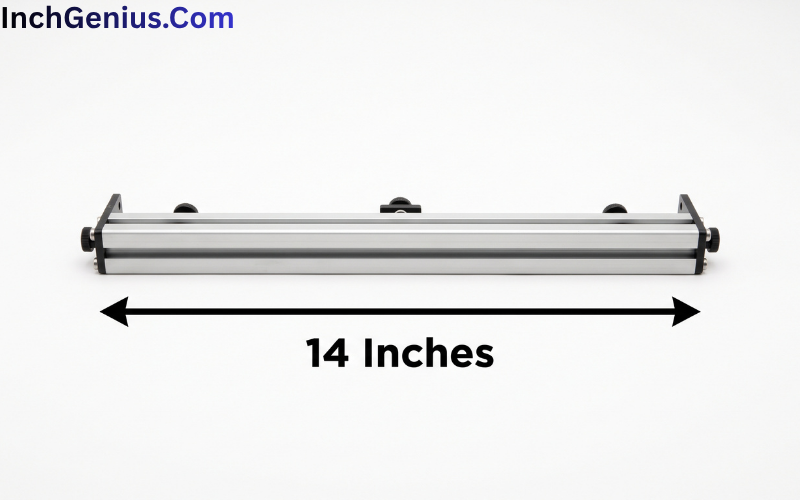
A jig fence is a straight guide used to help position material during woodworking or other workshop tasks. Hobbyists can cut a wooden fence to 14 inches for a particular project.
Because the piece is straight and rigid, it offers a simple visual comparison. You can place it beside a 12-inch ruler and see the extra 2 inches immediately.
This example also highlights an important point: a custom-made object can be a more reliable measurement reference than a mass-produced item with varying sizes.
How to Measure 14 Inches Without a Ruler
If you do not have a ruler available, you can still estimate 14 inches by using a known measurement as a reference.
Method 1: Start With One Foot
One foot is exactly 12 inches. Add another 2 inches to that length to reach 14 inches.
If you have an object with a verified 12-inch length, you can use it as the starting point and estimate the remaining 2 inches. This method is most reliable when the original reference is measured accurately.
Method 2: Use a 14-Inch Reference Object
If you have a craft rod, ruler, or other item whose length has already been verified as 14 inches, keep it somewhere convenient. You can use it for quick comparisons when measuring similar objects.
Avoid relying on an item merely because it looks approximately the right size. Check it once with a proper measuring tool first.
Method 3: Use a Measuring Tape
A measuring tape is the best choice when you need a reliable measurement. Align the zero mark with one end of the object and read the measurement at the other end.
Keep the tape straight rather than allowing it to curve across the object. For soft materials, measure while the material is laid flat without stretching it.
How to Convert 14 Inches Into Other Units
Converting inches into other units is straightforward when you know the correct conversion factors.
Inches to Centimeters
One inch equals 2.54 centimeters.
14 × 2.54 = 35.56 centimeters.
Therefore, 14 inches equals 35.56 cm.
Inches to Millimeters
One inch equals 25.4 millimeters.
14 × 25.4 = 355.6 millimeters.
Therefore, 14 inches equals 355.6 mm.
Inches to Feet
One foot contains 12 inches.
14 ÷ 12 = 1.1667 feet.
This is the same as 1 foot and 2 inches.
Inches to Meters
One inch equals 0.0254 meters.
14 × 0.0254 = 0.3556 meters.
Therefore, 14 inches equals 0.3556 m.
FAQS
Is 14 inches longer than one foot?
Yes. One foot equals 12 inches, so 14 inches is 2 inches longer than one foot.
How many centimeters are in 14 inches?
There are 35.56 centimeters in 14 inches. This conversion is exact when using the standard relationship of 2.54 centimeters per inch.
Is 14 inches the same as 1.5 feet?
No. Fourteen inches equals approximately 1.167 feet. One and a half feet equals 18 inches, which is 4 inches longer.
How can I picture 14 inches at home?
Start with a 12-inch ruler and imagine extending its length by another 2 inches. You can also use a craft rod, wooden strip, or other object that has been measured and confirmed to be 14 inches long.
Are all objects listed in this guide exactly 14 inches long?
No. The examples describe object types that can be made, cut, or purchased in approximately 14-inch lengths. Their dimensions vary by manufacturer, product model, and intended use. Always verify the actual measurement if precision matters.
What is the easiest way to measure 14 inches accurately?
Use a ruler or measuring tape marked in inches. Align the zero mark with the starting edge and read the measurement at the opposite end. A metric ruler can also work if you measure 35.56 centimeters.
Related Post: How Long is 20 Inches
Conclusion
Fourteen inches is equal to 1 foot and 2 inches, or 35.56 centimeters. Although this length may be difficult to estimate at first, comparing it with a verified ruler, craft dowel, foam board strip, or custom-cut workshop component makes it easier to visualize.
The most important thing to remember is that familiar objects are useful for estimating length, but their dimensions are not always standardized. If you need an accurate 14-inch measurement for a DIY project, furniture component, craft, or repair, confirm the object’s length with a ruler or measuring tape.