
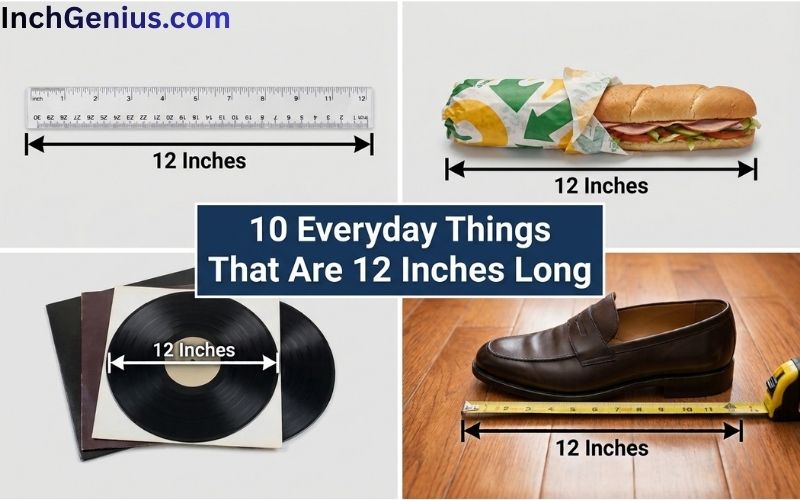
Have you ever needed to measure something but realized you didn’t have a ruler or measuring tape nearby? Maybe you are checking whether an item will fit inside a box, comparing the size of a product before ordering it online, or working on a small home improvement project. In situations like these, knowing what a particular measurement looks like can be surprisingly helpful. One measurement that comes up frequently in everyday life is 12 inches.
So, how long is 12 inches in real life? It is a length you can visualize by comparing it with familiar objects around your home, kitchen, office, or workspace. A standard ruler, a sheet of paper, and certain food items can all help you develop a better understanding of this distance. However, some objects measure exactly 12 inches, while others are only close to that length, so choosing the right comparison matters.
In this guide, InchGenius breaks down the length of 12 inches using 10 recognizable objects, practical measurement examples, and simple ways to estimate this distance without a measuring tool. By the end, you will have a much clearer idea of what 12 inches looks like and how to use these comparisons in everyday situations.
How Long Is 12 Inches
Before comparing everyday objects, it helps to understand the actual length. Twelve inches is a standard measurement in the US customary system, and it has the following equivalents:
- 12 inches = 1 foot
- 12 inches = 30.48 centimeters
- 12 inches = 304.8 millimeters
- 12 inches = 0.3048 meters
The centimeter measurement is particularly useful because many products, appliances, and household items list their dimensions in metric units. For example, if an online product description says that an item is approximately 30.5 centimeters long, you can recognize that it is almost exactly 12 inches.
Keep in mind that length is measured from one end of an object to the other. The object’s width, height, or thickness does not count toward its length unless you are measuring that particular dimension.
What Does 12 Inches Look Like?
Imagine a straight line extending across a desk for just over 30 centimeters. That is approximately how far 12 inches reaches. It is long enough to cover a noticeable section of a tabletop, yet compact enough to fit inside many drawers, bags, and small storage containers.
The easiest way to picture this measurement is to connect it with something familiar. If you have a 12-inch ruler, you already have an exact reference. If you do not, you can use a sheet of paper, a foot-long sandwich, or a round pizza with a 12-inch diameter to develop a rough visual estimate.
One important detail is that not every object described as a foot-long measures exactly 12 inches. Food portions, manufactured products, and household supplies can vary by brand or design. The examples below distinguish between exact measurements and approximate comparisons so you can use them more confidently.
10 Common Things That Are 12 Inches Long
1. A Standard 12-Inch Ruler
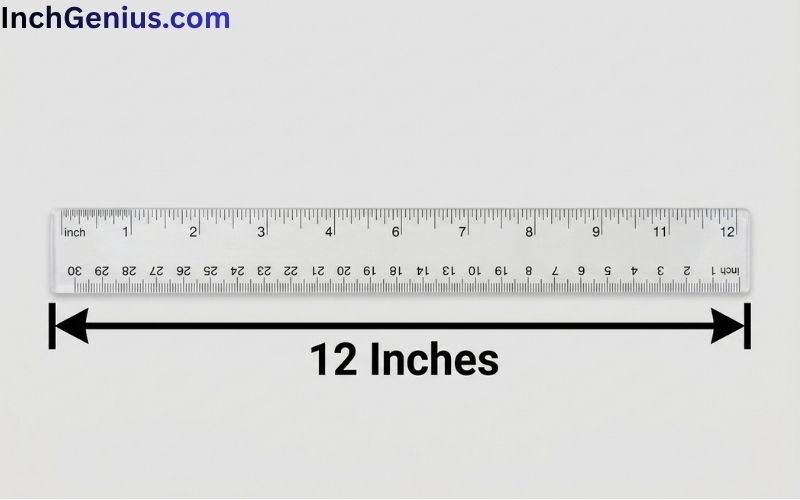
A standard 12-inch ruler is the most straightforward example because it is specifically designed to measure this length. It is commonly used by students, teachers, office workers, artists, and people working on small DIY projects.
Place the ruler on a flat surface and look at the distance between the zero mark and the 12-inch mark. That distance is exactly 12 inches, regardless of whether the ruler is made from plastic, wood, or metal.
It is important to distinguish the measuring scale from the ruler’s overall physical length. Some rulers have extra material beyond the zero and 12-inch markings, so the entire object may be slightly longer than the distance it measures.
A ruler is especially useful when you want to check whether another object is close to one foot long. You can place the item beside the ruler and compare their endpoints. If the object extends to the 12-inch mark, its measured length is approximately one foot.
2. A Standard Sheet of US Letter Paper
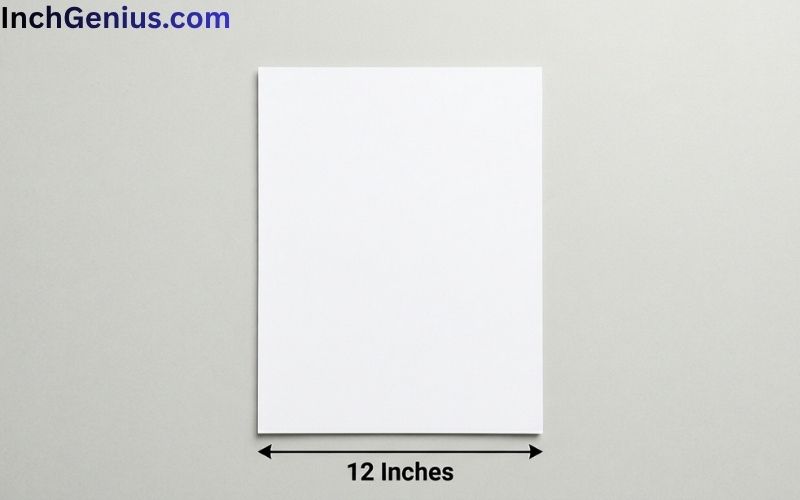
A standard sheet of US Letter paper measures 8.5 inches wide and 11 inches long. Although it does not reach 12 inches, its longer edge is a useful reference because it comes within one inch of the target measurement.
Imagine holding a sheet of printer paper vertically and looking along its longer side. The distance from the top edge to the bottom edge is 11 inches, which is about 91.7% of 12 inches. This makes the paper slightly shorter than a full foot.
US Letter paper is widely used for printed documents, homework, office reports, forms, and everyday notes. Because it is so familiar, you can use it to estimate a length when a ruler is unavailable.
For a rough comparison, place the paper beside the object you want to measure. If the object is slightly longer than the paper’s long edge, it may be approaching 12 inches. However, this method only provides an estimate because the difference is still one full inch.
Be careful not to confuse US Letter paper with A4 paper. A4 measures approximately 11.69 inches long, so it comes even closer to 12 inches than US Letter paper does.
3. A One-Foot Wooden Board
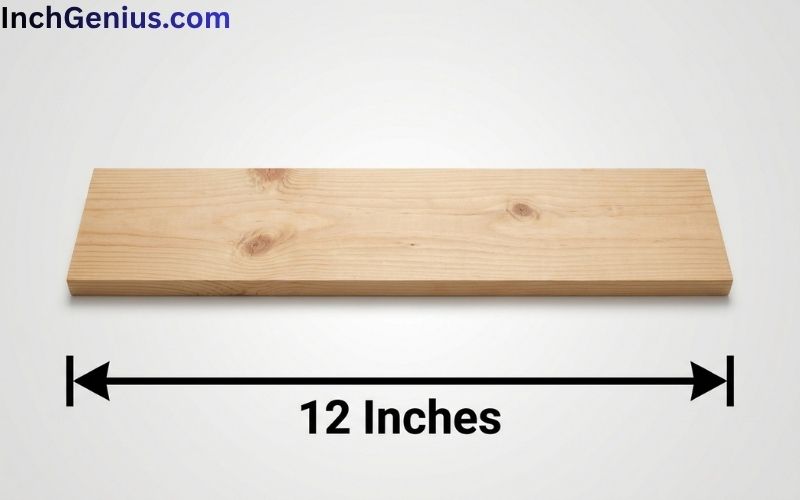
A wooden board cut to 12 inches offers a practical example of this measurement, especially for people interested in woodworking, furniture repairs, or home improvement.
Picture a straight piece of wood lying on a workbench. If the distance from one end to the other measures exactly 12 inches, it represents the full length you are trying to visualize. The board might be narrow like a wooden craft strip or wider like a short shelf component.
The board’s width and thickness do not change its length. For example, a board measuring 12 inches long, 4 inches wide, and 1 inch thick still has a length of 12 inches. These are three separate dimensions, each describing a different part of the object.
Short wooden boards are used for decorative projects, small storage solutions, model-making, and woodworking practice. Comparing one with other materials can help you judge how much space a foot-long piece occupies before cutting or assembling anything.
If you are buying lumber, remember that advertised dimensions and actual dimensions may differ depending on the product and whether it has been finished or planed. Always check the specified length instead of assuming that every board in a particular category measures one foot.
4. A Foot-Long Sub Sandwich
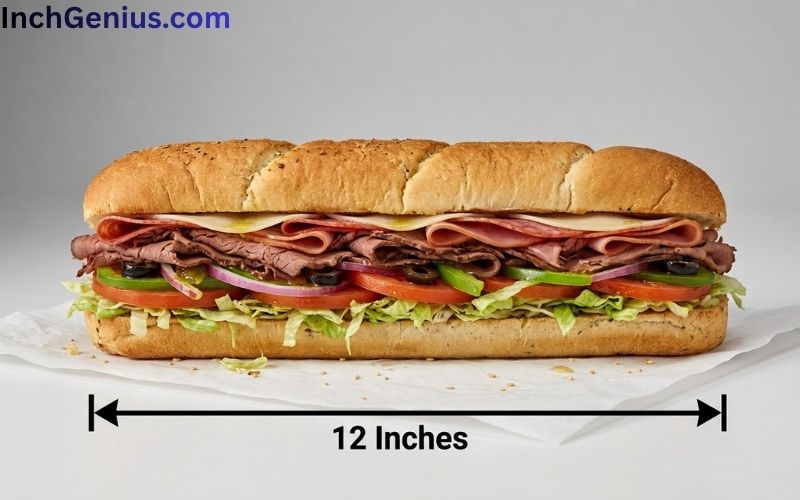
A foot-long sub sandwich is an easy food-based example of a length close to 12 inches. Many sandwich shops use the term “foot-long” to describe a large sandwich intended to measure approximately one foot from end to end.
Imagine placing a long sandwich horizontally on a serving tray. Its overall length gives you a familiar visual reference for the distance between two points that are 12 inches apart.
This comparison is particularly useful because it turns a measurement into something you can picture without thinking about numbers. If you have seen a foot-long sandwich before, you probably already have a reasonable idea of its approximate length.
However, not every sandwich is exactly 12 inches long. Bread can vary in size, and the final length depends on how it is prepared and measured. The label is a convenient reference, but it should not be treated as a precision measurement.
It is also important to measure the sandwich from one end of the bread to the other, rather than measuring its circumference, width, or the length of a curved section.
Related Post: How Long is 7 Inches
5. A Pizza With a 12-Inch Diameter
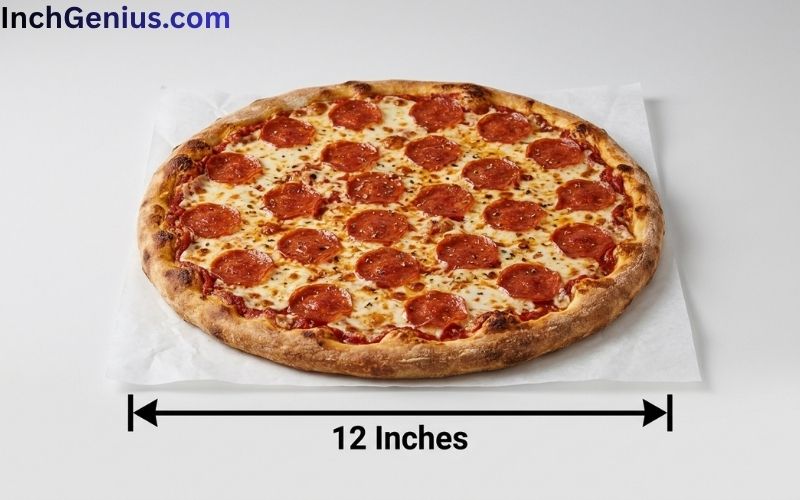
A pizza labeled 12 inches provides another familiar way to understand this measurement. In pizza sizing, the stated number normally refers to the diameter, which is the straight-line distance across the circular pizza through its center.
If you place a ruler across the center of a 12-inch pizza, the distance from one outer edge to the opposite outer edge should be approximately 12 inches. That is the same length as the distance you would measure along a straight ruler from the zero mark to the 12-inch mark.
The circular shape makes this example slightly different from a ruler or wooden board. The pizza’s diameter is 12 inches, but the distance around its outer edge is much greater. For a perfect circle with a 12-inch diameter, the circumference is approximately 37.7 inches.
This distinction matters when you are comparing round objects with rectangular ones. A pizza can be 12 inches across without being 12 inches long in every direction. Its size refers to a particular dimension, not the total distance around the crust.
Pizza sizes can also vary slightly from their advertised dimensions, so use the label as a practical reference rather than an exact measurement.
6. A Box With a 12-Inch Side
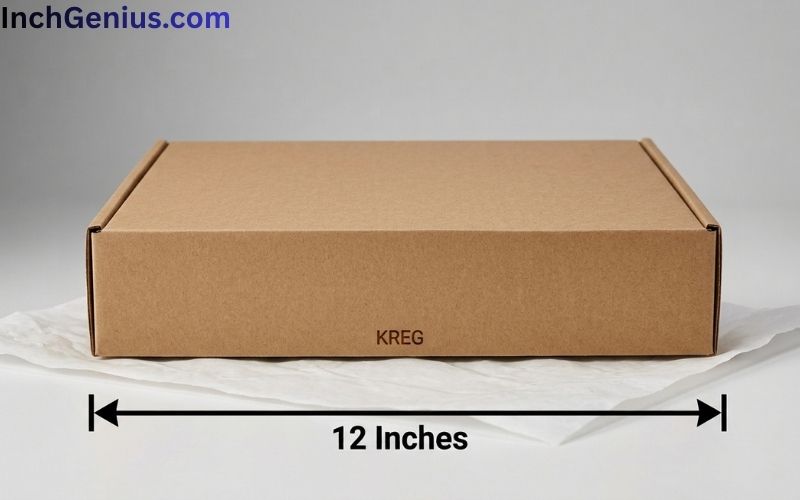
A cardboard box with one side measuring 12 inches is a useful example for understanding product dimensions and storage space. Boxes are commonly measured by their length, width, and height, so it is important to identify which side represents the 12-inch measurement.
For example, a box measuring 12 inches long, 8 inches wide, and 6 inches high has one dimension that extends exactly 12 inches. When placed on a table, that longer side provides a clear visual reference for one foot.
Boxes of this size may be used for shipping small household goods, storing craft supplies, organizing personal belongings, or packing gifts. Their rectangular shape also makes them useful when planning how items will fit inside a larger container.
One common mistake is assuming that a box measuring 12 inches in one dimension is 12 inches in every direction. A box measuring 12 × 8 × 6 inches has three different measurements. Its length is 12 inches, but its width and height are shorter.
Another detail to remember is that external dimensions and internal dimensions may differ because of the cardboard thickness and construction. If you need to fit an object inside a box, the interior dimensions are the ones that matter most.
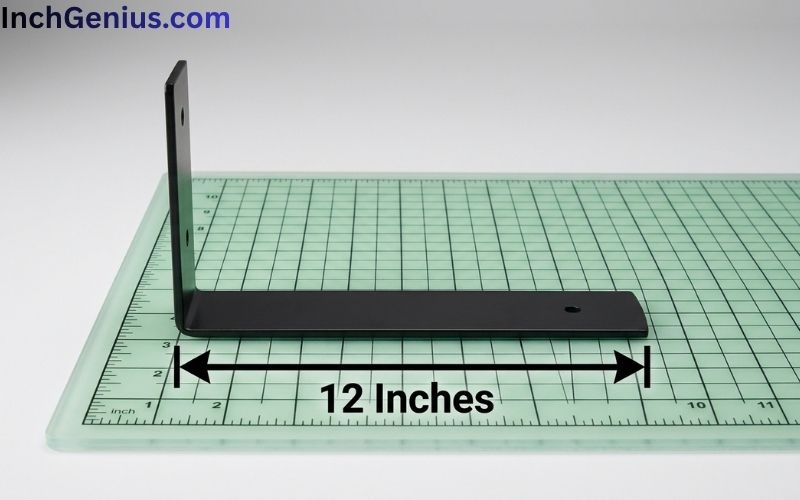
7. A 12-Inch Metal or Wooden Shelf Bracket
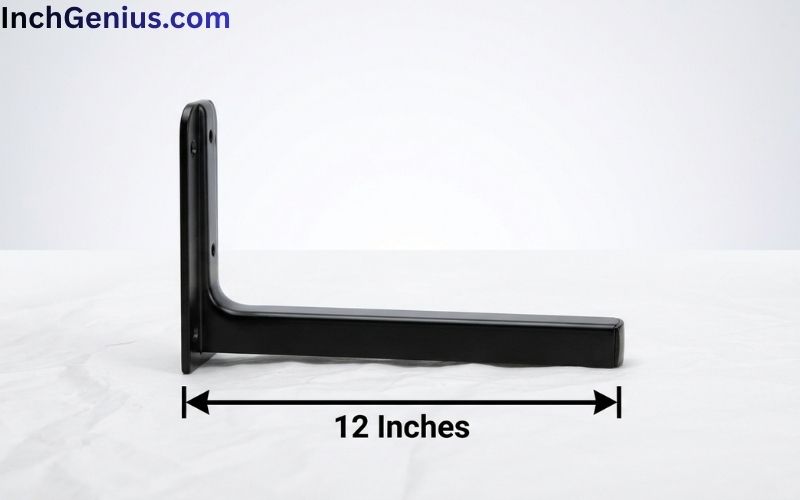
Some shelf brackets are manufactured with a 12-inch arm or support length. These are useful references for people working on shelving, garages, utility rooms, and home organization projects.
Imagine a straight bracket extending outward from a wall to support a shelf. If its horizontal arm measures 12 inches, that arm gives you a direct example of the target length. The bracket may also have a vertical section, but the vertical measurement is separate from the horizontal one.
Shelf brackets are available in different shapes, including L-shaped metal supports, decorative brackets, and heavy-duty designs. Their overall dimensions depend on the model, so not every bracket sold for a 12-inch shelf will have an arm measuring exactly 12 inches.
The example is most useful when the manufacturer’s listed dimensions clearly identify a 12-inch component. A bracket’s advertised shelf depth or compatible shelf size does not necessarily mean that the bracket itself measures exactly 12 inches.
Related Post: How Long is 9 Inches
8. A 12-Inch Craft or Cutting Mat

A craft mat with a 12-inch side is a practical reference for people who enjoy sewing, scrapbooking, paper crafts, model-making, or other creative activities.
Many cutting mats include measurement markings to help users trim paper, fabric, cardboard, and similar materials. If one side of the mat measures 12 inches, you can use it to visualize the distance directly while working on a project.
For example, a mat measuring 12 × 18 inches has a shorter side of 12 inches and a longer side of 18 inches. The shorter side provides an exact reference for the measurement, assuming the dimensions stated by the manufacturer are accurate.
This example also demonstrates why reading product dimensions carefully matters. A mat described as a 12-inch craft mat might have a 12-inch width, a 12-inch length, or another dimension associated with its intended use.
The markings can be especially helpful because they let you compare different materials against the same measurement without needing to reposition a separate ruler each time.
9. A 12-Inch Laptop or Tablet Screen Reference
Laptop and tablet sizes can help you picture a measurement, but there is an important distinction: screen sizes are generally measured diagonally, not horizontally from one side to the other.
For example, a device advertised with a 12-inch screen typically has a display diagonal of approximately 12 inches. Its actual width and height will be shorter, and those dimensions depend on the screen’s aspect ratio and bezel design.
This makes a 12-inch display a useful comparison for understanding a diagonal distance rather than a straight horizontal length. If you are trying to visualize an object that measures 12 inches from left to right, the screen’s diagonal should not be treated as an exact match.
For a rough mental picture, imagine the diagonal line running from one corner of the display to the opposite corner. That line is approximately 12 inches on a device with a 12-inch diagonal screen.
The overall laptop or tablet may be larger than the display because of the surrounding frame, keyboard, or casing. Therefore, the advertised screen size is not the same as the device’s external dimensions.
Related Post: How Long is 13 Inches
10. A 12-Inch Baking or Serving Tray
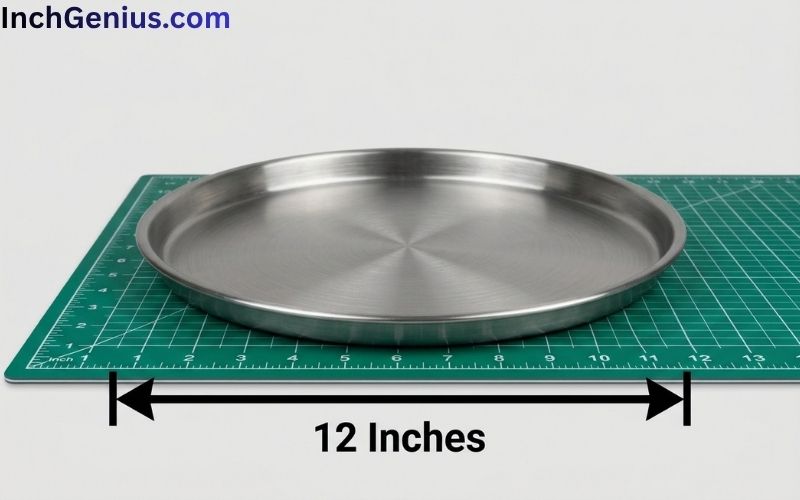
A round baking pan or serving tray with a 12-inch diameter offers another practical way to visualize a foot-long measurement. These items are commonly used in kitchens for baking, serving food, and organizing ingredients.
For a circular tray, the 12-inch dimension generally refers to the distance across its center from one outer edge to the opposite edge. If the tray is rectangular, however, a 12-inch measurement may describe its length or width instead.
Imagine placing the tray on a countertop. Its diameter or stated side length gives you an idea of how much surface space a 12-inch object occupies. This is particularly helpful when checking whether a tray will fit inside a cabinet, on a shelf, or in a particular cooking area.
As with other manufactured products, the stated size may refer to the outside edge, the usable cooking surface, or another specified dimension. Baking pans can also have sloping sides, making the top opening wider than the base.
For accurate kitchen planning, check the manufacturer’s listed measurements and identify exactly which part of the tray is being measured.
How to Estimate 12 Inches Without a Ruler
Sometimes you need a quick measurement but do not have any measuring tools available. Although these methods cannot guarantee precision, they can help you estimate a length close to 12 inches.
Compare the Object With Familiar Items
Look for an object whose dimensions you already know. A standard 12-inch ruler is ideal, but US Letter paper can provide a near-foot reference because its long edge measures 11 inches.
If you have a box or board with a verified 12-inch side, place it next to the object you want to estimate. Comparing the endpoints will help you judge whether the unfamiliar item is shorter, longer, or approximately the same length.
Use a Known Measurement in Centimeters
If you are more familiar with the metric system, remember that 12 inches equals 30.48 centimeters. You can use a measuring tool marked in centimeters to identify the same distance.
For a quick estimate, 30.5 centimeters is very close to 12 inches. This is often easier to remember than the more precise decimal conversion.
Divide a Longer Measurement Into Sections
If you have an object with a known length of 24 inches, half of that length is 12 inches. Similarly, one-third of a 36-inch length is 12 inches.
This method works best when the original measurement is known and the object can be divided into equal sections visually or with a measuring tool. Estimating thirds or halves by eye alone may introduce errors, so use it only when an approximate result is sufficient.
Remember That Estimates Are Not Exact Measurements
Visual comparisons are useful for everyday tasks, but they should not replace a ruler or tape measure when accuracy matters. A difference of even half an inch can be important when cutting materials, installing hardware, or checking whether a product will fit into a limited space.
For any project that requires a precise fit, measure the object directly and record the relevant dimension.
Why Knowing the Length of 12 Inches Is Useful
Understanding this measurement can help in several everyday situations.
- Shopping online: Product dimensions become easier to imagine when you can compare them with familiar objects.
- Home improvement: You can make better initial estimates when planning shelf space, small repairs, and storage arrangements.
- Crafts and school projects: Knowing what 12 inches looks like helps when cutting paper, wood, cardboard, and other materials.
- Packing and shipping: A clear idea of the length helps you estimate whether an item may fit inside a box or storage container.
- Kitchen planning: Familiar measurements make it easier to compare cookware, serving trays, and other kitchen supplies.
The main benefit is that you no longer have to rely on the number alone. Connecting a measurement with a real object makes it easier to remember and apply.
FAQS
Is 12 inches exactly one foot?
Yes. In the US customary measurement system, one foot is defined as exactly 12 inches. The two measurements describe the same length using different units.
How many centimeters are in 12 inches?
Twelve inches equals exactly 30.48 centimeters. For quick everyday estimates, you can round this to approximately 30.5 centimeters.
Is a sheet of paper 12 inches long?
A standard US Letter sheet of paper measures 11 inches long and 8.5 inches wide, so its longer edge is one inch shorter than 12 inches. A4 paper measures approximately 11.69 inches long, which is closer to 12 inches.
Can I use my hand to estimate 12 inches?
You can use your hand to make a rough estimate, but hand sizes vary considerably from person to person. If you know the measured length of your hand or hand span, you can use it as a personal reference. For better accuracy, check it against a ruler first.
Is a 12-inch pizza exactly one foot wide?
A pizza advertised as 12 inches generally has a diameter of approximately 12 inches. Actual sizes can vary slightly, and the measurement refers to the distance across the center rather than the distance around the crust.
Related Post: How Long is 20 Inches
Conclusion
Understanding how long 12 inches is becomes much easier when you connect the measurement with objects you already recognize. A standard ruler provides an exact reference, while US Letter paper, a foot-long sandwich, a 12-inch pizza, and a measured box can help you develop a practical sense of the distance.
The important thing is to distinguish between objects that measure exactly 12 inches and those that are simply close to that length. Screen sizes, for example, are usually measured diagonally, while a pizza’s size generally refers to its diameter. Knowing which dimension you are comparing helps prevent confusion.
For everyday estimates, these familiar examples can be surprisingly useful. But whenever you need an accurate fit for a DIY project, a purchase, or a home improvement task, a ruler or measuring tape remains the most reliable choice. With a few simple comparisons in mind, estimating a 12-inch length becomes much more natural and convenient.