
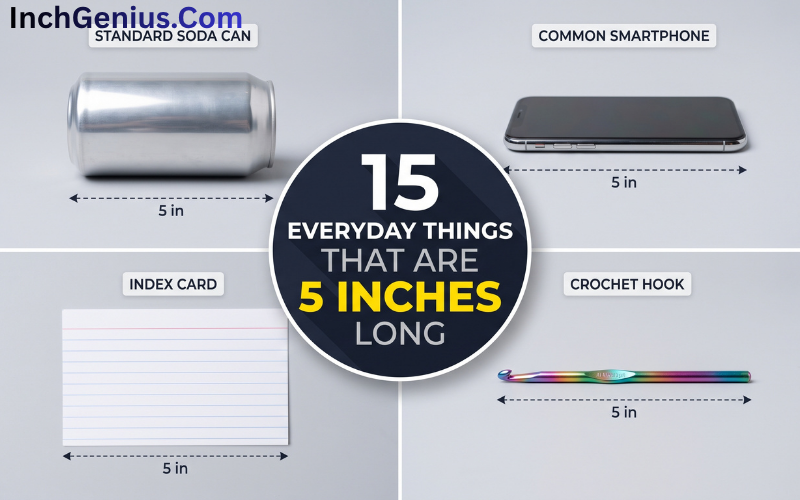
Have you ever looked at a product online and wondered how big five inches would actually look in your hand? A measurement can seem simple on paper, but picturing it in real life is not always easy. Whether you are buying a small accessory, working on a DIY project, or comparing an object’s size, knowing what five inches looks like can help you make better decisions.
The easiest way to understand this length is to compare it with familiar objects. Some everyday items are almost exactly five inches long, while others come close enough to provide a helpful visual reference.
How Long Is 5 Inches?
Five inches is exactly 12.7 centimeters or 127 millimeters. In feet, it equals approximately 0.417 feet. It is one inch shorter than half a foot, which measures six inches.
To picture five inches, imagine a standard 3 × 5-inch index card viewed along its longer edge. That edge measures five inches, making it a convenient reference. Other objects, such as a standard soda can, a passport booklet, and certain small tools, are slightly shorter but can still help you visualize the measurement.
Remember that not every product has a universal size. The dimensions of electronics, household accessories, and tools can vary by model, so use exact specifications whenever a precise measurement matters.
What Does 5 Inches Look Like?
Five inches looks like a short but noticeable length, measuring about 12.7 cm from one end to the other. It is longer than the short edge of a typical credit card and shorter than a standard six-inch ruler.
Picture a small object resting across your palm. Five inches is long enough to be easy to see, yet compact enough to fit in many pockets, drawers, and storage compartments. It can represent the height of a small container, the length of a compact tool, or the diameter of a small round item, depending on the object’s shape.
For a reliable comparison, use an item with a known size rather than estimating from your hand. Hand sizes vary from person to person, and two objects that look similar may differ by half an inch or more.
15 Common Things That Help You Visualize 5 Inches
1. A Standard 3 × 5-Inch Index Card
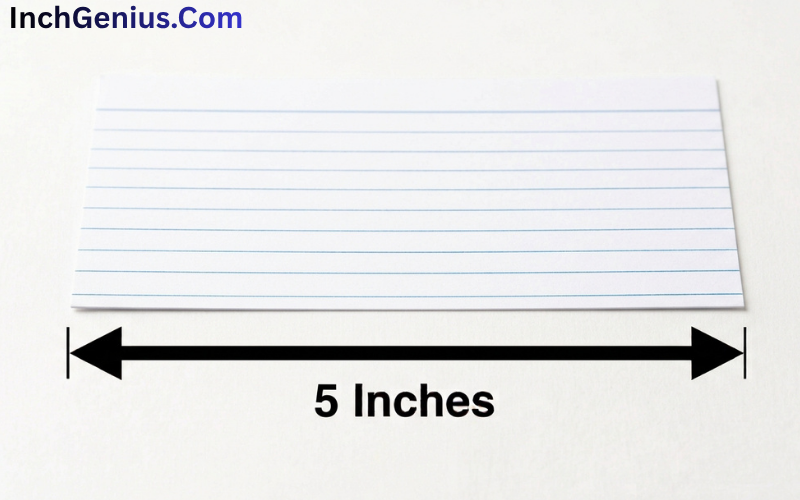
A standard 3 × 5-inch index card is one of the simplest ways to understand five inches. Its longer side measures five inches, while the shorter side measures three inches. This gives you two useful dimensions in a single, lightweight object.
Index cards are commonly used for study notes, flashcards, recipes, and reminders. You might find them in a school bag, office drawer, or stationery cupboard. Place one on a desk and follow its longer edge with your eyes to see the full five-inch distance.
Unlike many everyday objects, the card has a clearly defined nominal size. However, check the package if you need a precise measurement because products can vary slightly. For a quick mental reference, remember that the longer side of a standard 3 × 5-inch card represents five inches.
2. A 40d Common Nail
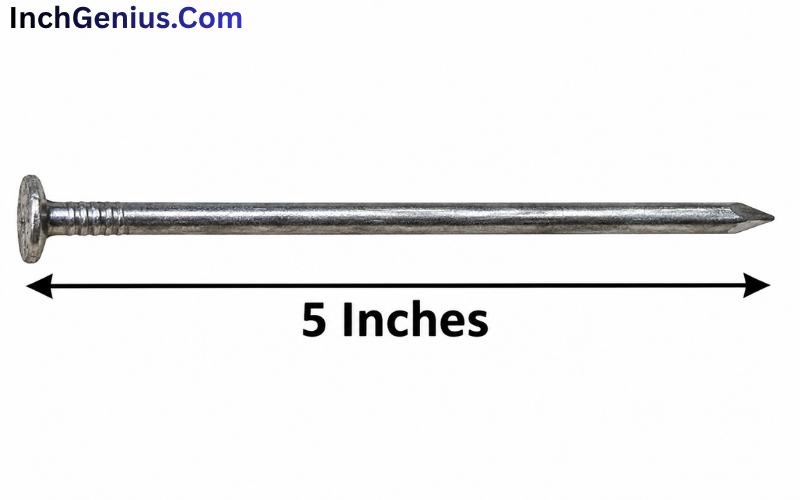
A 40d common nail is a useful hardware reference because its standard nominal length is five inches. The “40d” designation identifies a particular nail size, and the five-inch measurement refers to its length rather than the width of its head.
You may encounter large common nails in construction settings, timber projects, or hardware stores. Compared with small finishing nails used for trim, a five-inch nail looks considerably longer and is designed for different fastening jobs.
If you have one available, place it on a flat surface and compare its full length with a ruler. Do not assume that every large nail is five inches long, since nail sizes vary substantially. The 40d common nail is a more dependable reference than simply choosing a nail that looks close to the target measurement.
Related Post: How Long is 4 Inches
3. A Standard 12-Ounce Soda Can
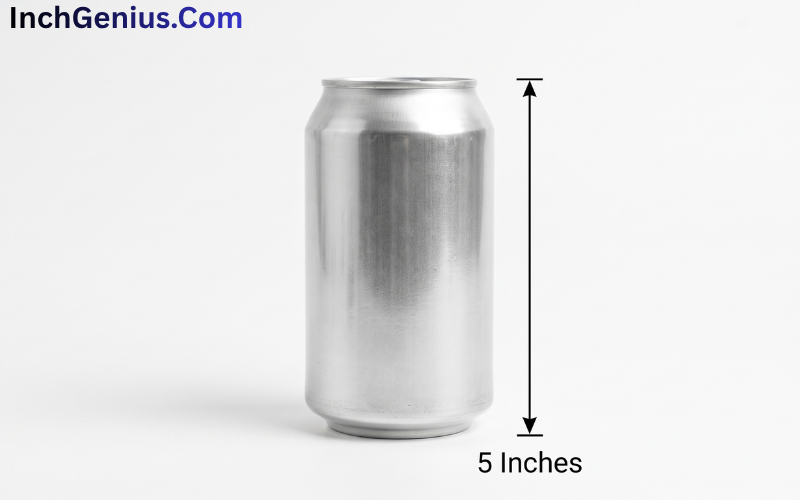
A standard US 12-fluid-ounce soda can is a helpful near-match for five inches. Many conventional cans are approximately 4.8 inches tall, although the exact dimensions depend on the manufacturer and can design.
Stand a can upright on a level surface and look at the distance from its base to the top. You will see a length that comes very close to five inches but falls a little short. That small difference matters if you are measuring a shelf opening or checking whether an object will fit into a tight space.
The can is useful because it is familiar, easy to find, and simple to position vertically. Just remember that slim cans, tall cans, and other beverage containers may have different dimensions. Treat the standard can as an approximate comparison, not an exact five-inch measuring tool.
4. A Passport Booklet
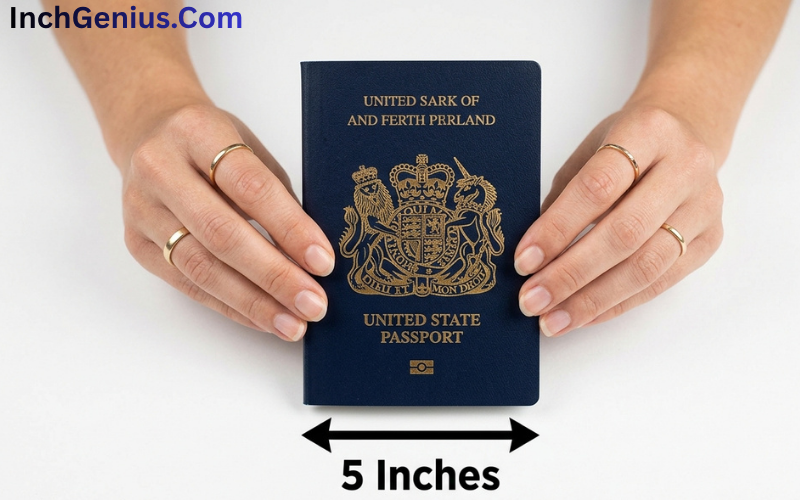
A typical passport booklet is close to five inches long along its longer edge. For example, a standard passport using the common 125 × 88 mm format measures about 4.92 inches by 3.46 inches when closed.
That makes the longer edge just a little shorter than five inches. If you have a passport, you can use its closed cover to get a quick visual impression of the target length. It is particularly handy when you are travelling and want to compare the size of a small pouch, wallet, or travel accessory.
Passport dimensions are standardized for many ordinary passport booklets, but covers and protective cases can add extra size. Measure the booklet itself rather than the case if accuracy matters. A passport is a good example of something that is nearly five inches long, not exactly five inches.
5. A Compact CD Jewel Case
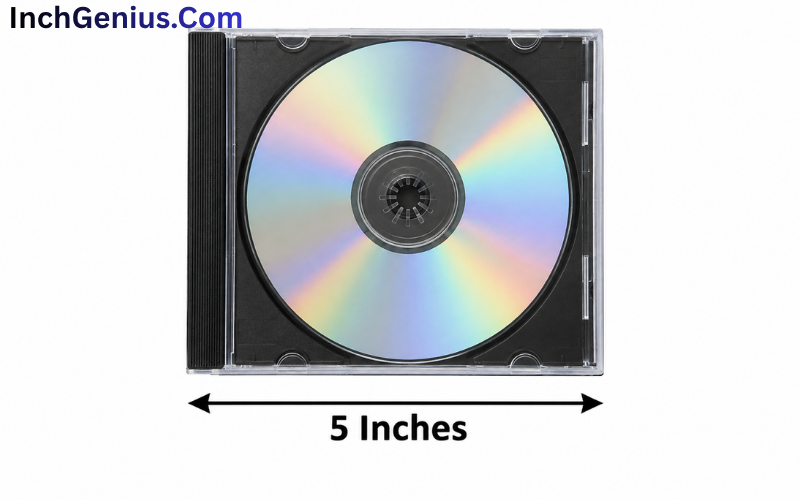
A traditional CD jewel case is another useful reference. The common square case measures approximately 5.6 inches on each side, so it is actually a little larger than five inches. Its overall size makes it helpful for visualizing a measurement near this range, but it should not be described as an exact five-inch object.
If you have an old music CD, place the case on a table and compare one edge with a ruler. The extra length beyond five inches is visible when you check carefully. This can help you understand why judging measurements by sight alone is not always reliable.
CD cases also vary: slim cases, multi-disc cases, and paper sleeves do not all share the same dimensions. Use a traditional full-size jewel case for this comparison, and remember that it is slightly longer than the target measurement.
6. An Older Compact Smartphone
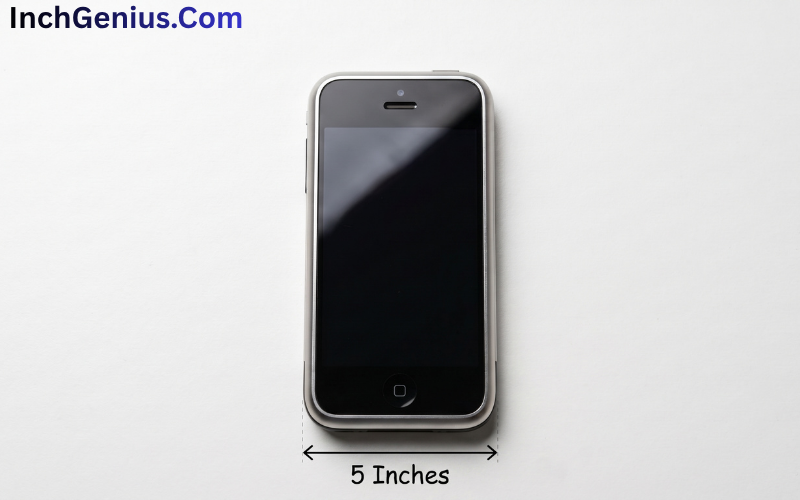
Some older compact smartphones are close to five inches long from the top edge of the body to the bottom edge. For instance, the first-generation iPhone SE measures approximately 4.87 inches in height, making it a near-match rather than an exact five-inch object.
A compact phone can be an easy reference because most people are familiar with the way a phone feels in the hand. Set the phone down and compare its body length with a ruler. You will see that it falls just short of five inches.
Be careful when using smartphones as measurement references: modern phones vary widely in height, and screen size is usually measured diagonally rather than along the phone’s length. If a phone is advertised with a five-inch screen, that does not mean the phone itself is five inches long. Check the device’s physical dimensions before using it for a close comparison.
Related Post: How Long is 3 Inches
7. Six US Nickels Laid in a Row
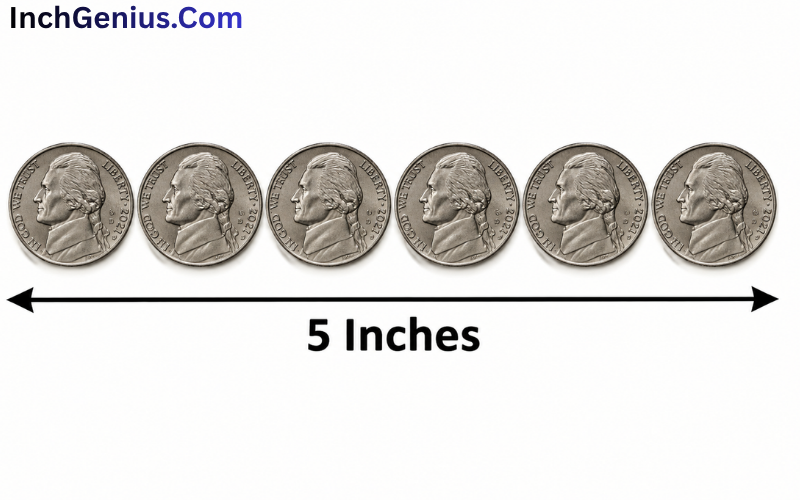
Six US nickels placed edge to edge measure approximately five inches in total. A US nickel has a diameter of about 0.835 inches, so six coins span roughly 5.01 inches when lined up carefully.
This is a fun comparison because coins are easy to handle and their dimensions are standardized. Arrange the nickels in a straight line on a flat surface, making sure the edges touch without overlapping. The complete row will be very close to five inches.
The method is not quite as convenient as using a ruler, because small gaps between coins can change the total length. It also applies specifically to US nickels; coins from other countries have different diameters. If you need a quick estimate and have the correct coins available, this can be a practical reference. For precise craft or construction work, use a proper measuring tool instead.
8. Three Standard Golf Balls in a Row
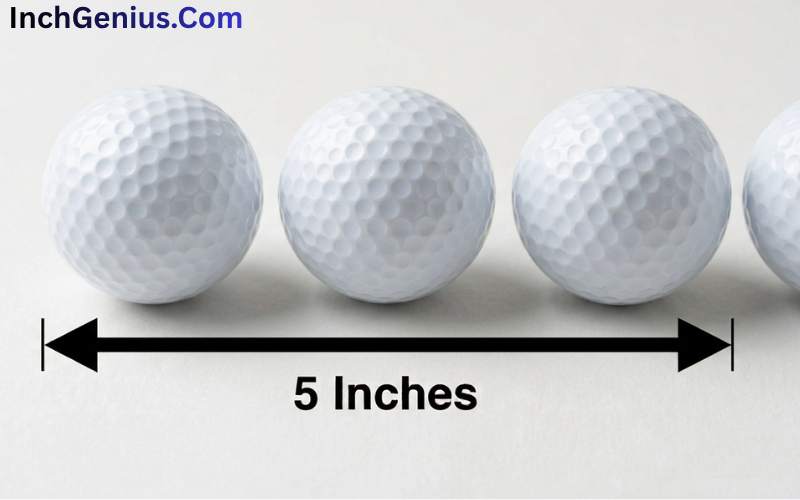
Three regulation-size golf balls lined up side by side make a length close to five inches. A golf ball has a minimum permitted diameter of 1.68 inches, so three balls measure at least 5.04 inches across when arranged in a straight row.
This gives you a comparison that is slightly longer than the target. Put the balls on a flat surface and align their centers in a straight line. The total span makes it easier to visualize how five inches compares with several smaller, round objects.
Golf balls are useful because their size is regulated, but the arrangement matters. If the balls roll apart or overlap in your viewing angle, the comparison becomes less reliable. Also, this example refers to the combined width of three balls placed side by side, not their height when stacked. It is a memorable visual aid, although a ruler remains the better option for exact measurements.
9. A Five-Inch Mini Cake Pan
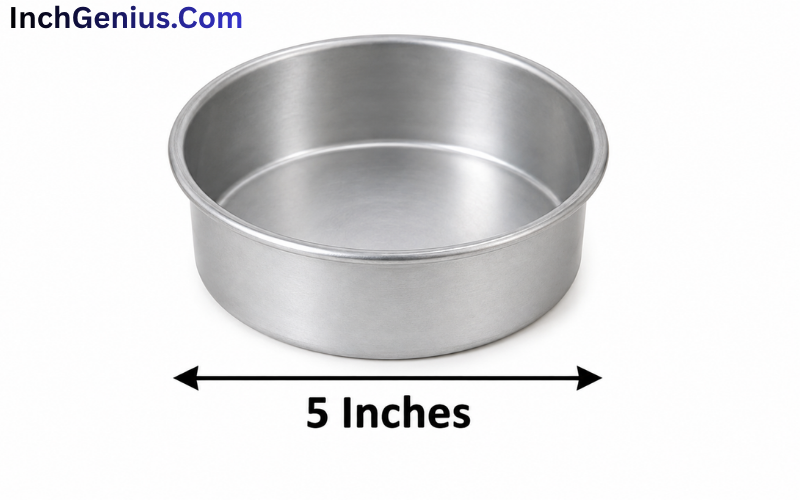
Mini baking pans are often sold in several diameters, including five-inch models. For a pan labeled as five inches, the measurement usually refers to the stated diameter or nominal size, and the actual usable interior may differ from its outside rim.
A round five-inch pan offers a different way to understand the measurement because you are looking across a circle rather than along a straight object. Imagine a line passing from one side of the pan to the opposite side through the center. That line represents the diameter.
If you are buying a mini pan, read the product specifications carefully. Some listings measure the top rim, while others provide the base diameter or overall dimensions. A five-inch pan can be a useful reference when you find a model explicitly sold in that size, but don’t assume that all mini cake pans measure five inches.
Related Post: How Long is 2 Inches
10. A Five-Inch Round Plant Saucer
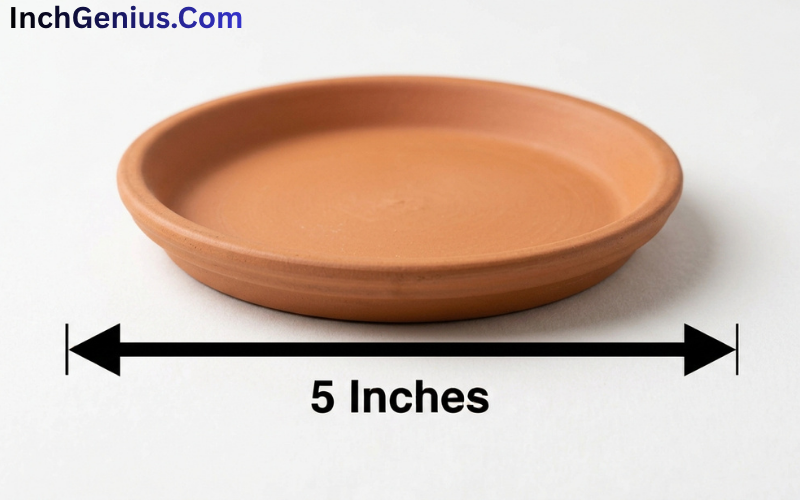
Small plant saucers are commonly sold in several sizes, and five-inch versions can be used to visualize this measurement. The stated size generally refers to the nominal diameter, although the rim and base may be different widths.
Place a saucer on a table and imagine a straight line running across its center from one edge to the other. If the product is a five-inch model, that line gives you a good example of the target distance. The shallow, circular shape also makes it easy to distinguish diameter from height.
This comparison is particularly useful when shopping for plant accessories, arranging small pots, or checking whether a saucer will fit on a windowsill. However, plant saucers are not all standardized. Check the manufacturer’s dimensions before relying on one to measure a space, especially if you need a snug fit.
11. A Five-Inch Square Picture Frame
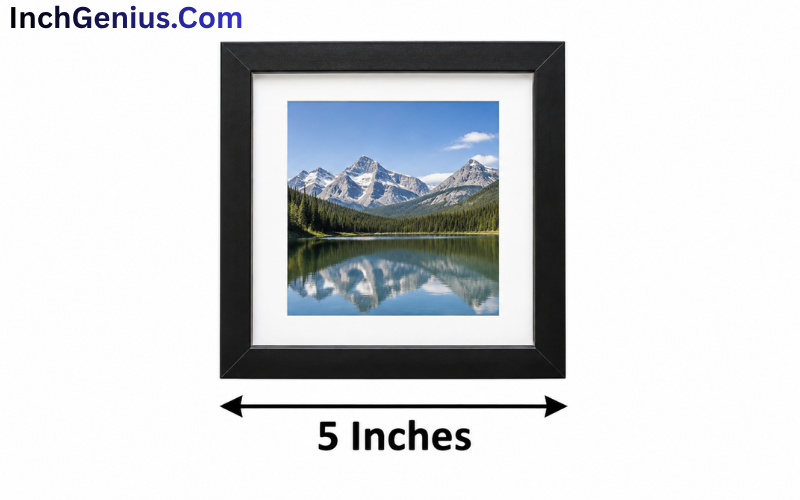
A small picture frame advertised as five inches square provides a visual reference for both height and width. A true five-inch square has sides measuring five inches each, although the outside dimensions of a frame may be larger than the picture it holds.
For example, a frame designed for a small square print might have a five-inch opening but a wider outer border. If you are using it as a measurement comparison, decide whether you are measuring the visible opening, the glass, or the entire frame.
This distinction is important when decorating a desk or shelf. A frame that holds a five-inch picture will not necessarily occupy exactly five inches of space. Choose a product with clearly listed outside dimensions if you need to check whether it will fit a particular area. A square frame is a useful visual example when its measured side is actually five inches.
12. A Five-Inch Diameter Coaster
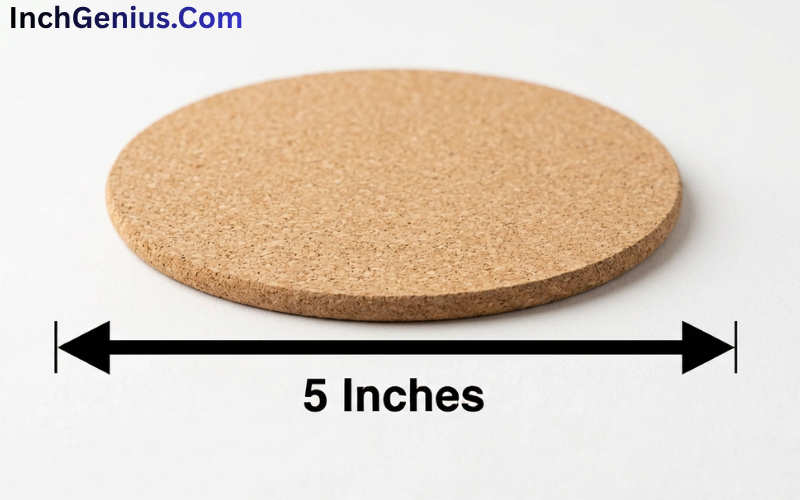
Some oversized drink coasters are sold with a diameter of around five inches. A circular coaster at this size is wider than many standard drink coasters, making it an easy example of a small object that spans five inches across.
To picture the measurement, look from one edge of the coaster to the opposite edge, passing through the center. That is the diameter. It is different from the circumference, which is the distance around the entire outside edge.
Coasters are available in cork, wood, silicone, stone, and other materials, and their dimensions vary by style. If your coaster is five inches across, it can help you visualize this length at a glance. If it is smaller or larger, don’t assume it is the same size simply because it looks similar. Check the packaging or measure it directly when accuracy matters.
13. A Five-Inch Craft Knife Handle
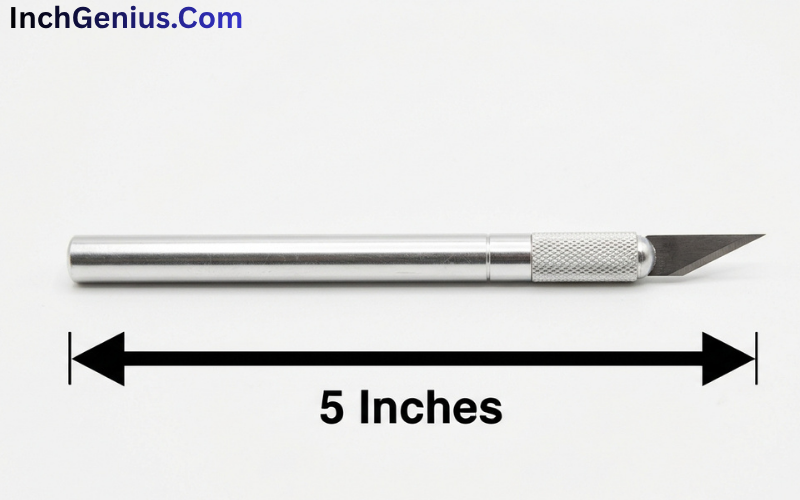
Some craft and utility tools are sold in compact designs with handles around five inches long. The exact size depends on the model, and the handle length may differ from the total length of the tool, especially when a blade extends beyond it.
For a fair comparison, look at the manufacturer’s listed handle measurement rather than estimating from a product photograph. A five-inch handle gives you a useful reference for the target length, while the complete tool might be longer.
Craft knives and utility cutters are also sharp tools, so do not use an exposed blade as a casual measuring aid. Keep the blade retracted or use a safe, non-sharp model if you are comparing dimensions. This example is best understood as a product-size reference: choose a tool whose specifications actually list a five-inch handle instead of assuming every craft knife has the same dimensions.
Related Post: How Long is 6 Inches
14. A Five-Inch Wooden Display Block
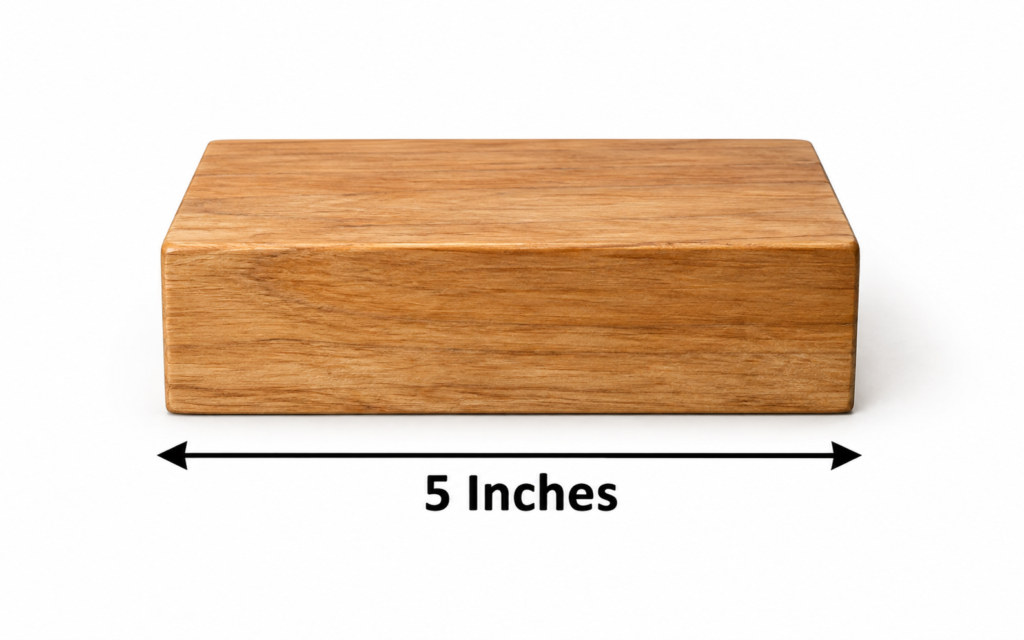
Small wooden display blocks and craft blanks are available in different square sizes, including five-inch versions. A five-inch square block measures five inches along each side, giving you a clear example of the measurement in a solid object.
This kind of block may be used for craft displays, small decorative projects, painting practice, or model-making. Its straight edges make it easier to compare with a ruler than an irregular object such as a stone or piece of wood cut by hand.
The key is to choose a block that is actually sold or cut to five inches. Handmade pieces can vary, and some products list the nominal size rather than the finished dimensions. If you are making a project where the pieces need to fit together, measure the block directly before cutting or assembling anything. A square block is a simple way to picture five inches in both width and length.
15. A Five-Inch Square Ceramic Tile
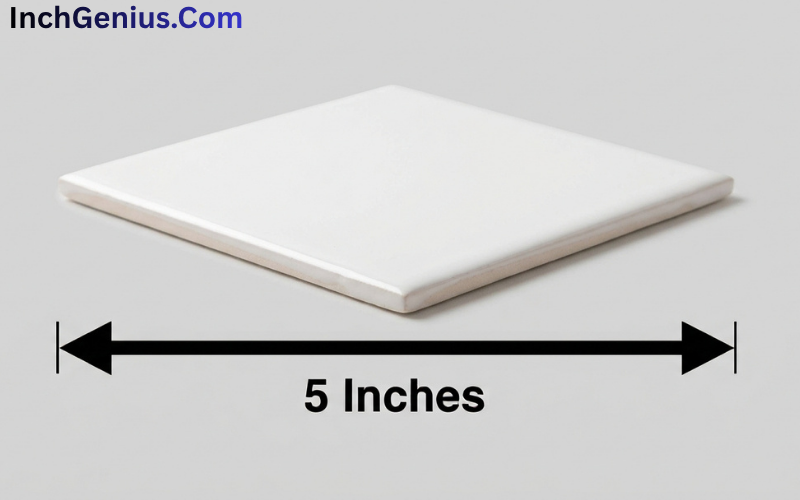
Small ceramic tiles are manufactured in a range of sizes, and a five-inch square tile is a useful example when you can find one specified at that dimension. Its side measures five inches, while the diagonal from one corner to the opposite corner is longer.
A square tile makes the target length easy to see because the edges are straight and the corners clearly define where the measurement begins and ends. It can help when planning a small mosaic, choosing craft materials, or visualizing the size of a decorative surface.
Not every tile sold as a small-format tile measures five inches; common tile dimensions vary by product and market. Check the listed size before using it as a reference. Also, if you are calculating how much space a tiled surface will cover, account for grout gaps and the tile’s actual dimensions rather than relying only on the nominal size.
Quick Comparison Table: 15 Things That Help You Visualize 5 Inches
| Object | Measurement or comparison | Accuracy |
| 3 × 5-inch index card | 5 inches along the long edge | Exact nominal size |
| 40d common nail | 5 inches long | Standard nominal size |
| 12-ounce soda can | About 4.8 inches tall | Approximate |
| Passport booklet | About 4.92 inches long | Near match |
| Traditional CD jewel case | About 5.6 inches per side | Slightly longer |
| First-generation iPhone SE | About 4.87 inches tall | Near match |
| Six US nickels in a row | About 5.01 inches | Very close |
| Three golf balls in a row | At least 5.04 inches | Very close |
| Mini cake pan | 5-inch diameter on selected models | Model-specific |
| Plant saucer | 5-inch diameter on selected models | Model-specific |
| Square picture frame | 5-inch side on selected models | Model-specific |
| Round coaster | 5-inch diameter on selected models | Model-specific |
| Craft knife handle | 5-inch handle on selected models | Model-specific |
| Wooden display block | 5-inch side on selected models | Model-specific |
| Square ceramic tile | 5-inch side on selected models | Model-specific |
The table includes exact nominal sizes, close comparisons, and examples that depend on the specific product. For an exact measurement, choose an item with a verified dimension rather than relying on appearance alone.
5 Inches Long: 5-Inch Conversion Chart
Five inches can be expressed in several units, which is useful when reading international product listings or following plans that use the metric system.
| Measurement unit | Equivalent |
| Inches | 5 in |
| Centimeters | 12.7 cm |
| Millimeters | 127 mm |
| Feet | 0.4167 ft |
| Yards | 0.1389 yd |
| Meters | 0.127 m |
The most useful conversion to remember is 5 inches = 12.7 centimeters. If a product description uses centimeters, look for a measurement close to 12.7 cm. Keep in mind that rounded product listings may show 12.5 cm or 13 cm even when the manufacturer’s original measurement differs slightly.
How to Estimate 5 Inches Without a Ruler
If you do not have a ruler nearby, you can still make a rough estimate using an object with a known size. The following methods are helpful for everyday comparisons, but they should not replace a measuring tool when precision is important.
Use a 3 × 5-inch index card. If you have a standard card, its longer edge gives you a direct five-inch reference. This is one of the simplest options because the size is printed or specified on many card packages.
Line up six US nickels. Six standard nickels arranged edge to edge span about 5.01 inches. Keep them in a straight line and avoid leaving gaps between them.
Compare with a standard soda can. A conventional 12-ounce can is about 4.8 inches tall. It gives you a near-match, but remember that it is slightly shorter than five inches.
Think in centimeters. Five inches equals 12.7 cm. If you have a metric measuring tape, measuring 12.7 cm gives you the same length without any conversion guesswork.
Check the item’s specifications. When measuring a phone, tool, container, or accessory, search for the manufacturer’s listed physical dimensions. This is more dependable than guessing from a photograph or assuming all products in the same category have identical sizes.
Why Understanding 5 Inches Is Useful
Knowing what five inches looks like can help with small but practical decisions. You might be checking whether a decorative object will fit on a shelf, estimating the size of a craft material, comparing a product listing with something you already own, or deciding whether a small accessory will fit inside a bag.
It is also useful when switching between inches and centimeters. A measurement of 12.7 cm may seem unfamiliar if you usually use inches, but remembering that it equals five inches makes the number easier to understand.
Still, visual comparisons have limits. A product may look close to five inches in a photograph because of camera perspective, and objects in the same category can have different dimensions. If a measurement affects safety, fit, installation, or the result of a project, verify it with a ruler or tape measure.
Related Post: How Long is 7 Inches
Frequently Asked Questions
Is 5 inches a long measurement?
Five inches is a relatively short length, measuring 12.7 cm. It is enough to span the long side of a standard 3 × 5-inch index card, but it is shorter than a standard six-inch ruler.
How many centimeters are in 5 inches?
Five inches equals exactly 12.7 centimeters. To convert inches to centimeters, multiply the number of inches by 2.54.
Is 5 inches the same as half a foot?
No. Half a foot is six inches, so five inches is one inch shorter.
Can I use my phone to estimate 5 inches?
You can use a phone as a rough reference if you know its physical height. However, phones vary by model, and screen size is measured diagonally, not along the body. Check the phone’s specifications before relying on it.
What is the easiest object to use when estimating 5 inches?
A standard 3 × 5-inch index card is one of the easiest references because its longer edge measures five inches. Six US nickels in a row are another close comparison, measuring approximately 5.01 inches.
Is a soda can exactly 5 inches tall?
No. A conventional US 12-ounce soda can is usually around 4.8 inches tall. It is close to five inches but is not an exact match, and different can designs can vary.
How do I measure 5 inches accurately?
Use a ruler or measuring tape marked in inches. Align the zero mark with one end of the object and read the measurement at the other end. If your tool uses centimeters, measure 12.7 cm.
Conclusion
Five inches equals 12.7 centimeters, making it a manageable length to picture once you compare it with familiar objects. A standard 3 × 5-inch index card provides a direct reference, while a soda can, passport booklet, and several small household items offer useful near-matches.
The most important thing is to distinguish between an object that measures exactly five inches and one that is simply close. Use everyday comparisons to build a mental picture, but reach for a ruler whenever an accurate measurement matters.