
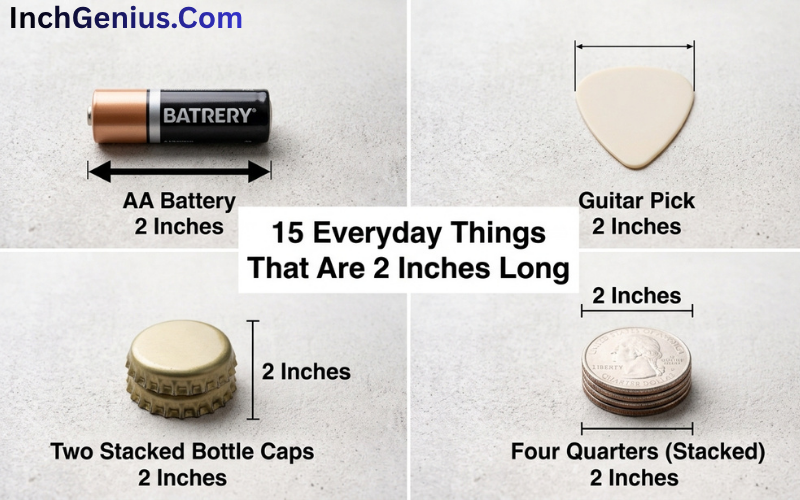
Have you ever looked at a small object online and wondered how big it would actually be in your hand? Two inches may sound like a simple measurement, but it can be surprisingly difficult to picture without a ruler. A small difference in size can matter when choosing hardware, measuring a craft project, or checking whether an accessory will fit.
The good news is that you can understand this measurement by comparing it with familiar objects and products made to specific dimensions. Some examples below are almost exactly 2 inches, while others have a particular width or component that measures 2 inches. That distinction matters because not every bottle cap, key, battery, or card has the same dimensions.
How Long Is 2 Inches?
2 inches equals 5.08 centimeters or 50.8 millimeters. It is also equal to one-sixth of a foot, approximately 0.167 feet.
Here is a quick conversion guide:
| Measurement Unit | Equivalent |
| Inches | 2 inches |
| Centimeters | 5.08 cm |
| Millimeters | 50.8 mm |
| Feet | 0.167 ft |
| Yards | 0.0556 yd |
| Meters | 0.0508 m |
The easiest way to picture 2 inches is to imagine a standard US business card’s short edge or the length of a typical AA battery. These are useful references because their dimensions are relatively consistent, unlike the size of a person’s thumb or an ordinary bottle cap.
What Does 2 Inches Look Like?
Imagine a straight line measuring 5.08 centimeters from one end to the other. That is 2 inches. It is a little longer than the diameter of a US quarter coin, which measures 0.955 inches across. Two quarters placed side by side span approximately 1.91 inches, making them a useful visual comparison rather than an exact substitute.
You can also picture the short side of a standard US business card. That edge measures 2 inches, although business cards in other countries may have different dimensions. These comparisons help you build a mental picture of the measurement without confusing an object’s height with its width or thickness.
15 Common Things That Are About 2 Inches Long or Wide
The examples below focus on specific, measurable dimensions. Some are exact-size products, while others are close comparisons. Always check the product specification if you need precision.
1. A Standard AA Battery
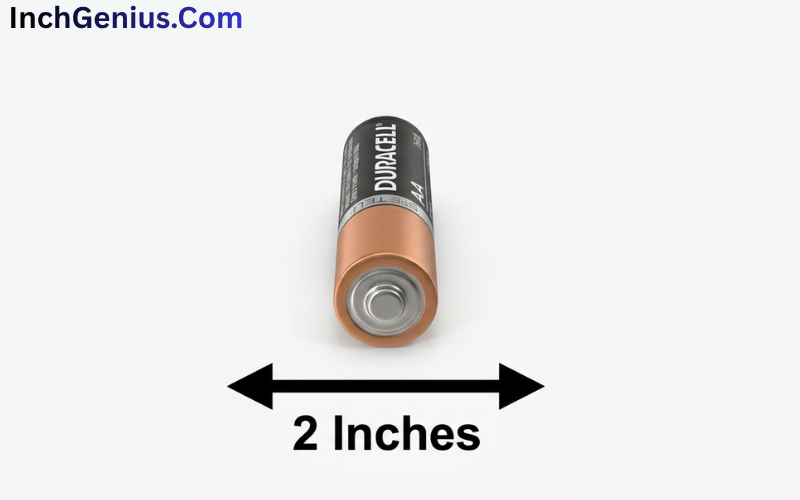
A standard AA battery is one of the most convenient everyday objects for visualizing 2 inches. A typical AA battery measures approximately 50.5 millimeters long, which converts to about 1.99 inches. That is only around 0.01 inch shorter than 2 inches.
AA batteries are commonly used in television remotes, clocks, toys, wireless accessories, and other household electronics. Their familiar cylindrical shape makes the measurement easy to picture. Place a battery on a flat surface and look from one end to the other, excluding any holder or surrounding device. Battery designs can vary slightly, but a standard AA battery is an excellent near-exact reference for this measurement.
2. The Short Edge of a US Business Card
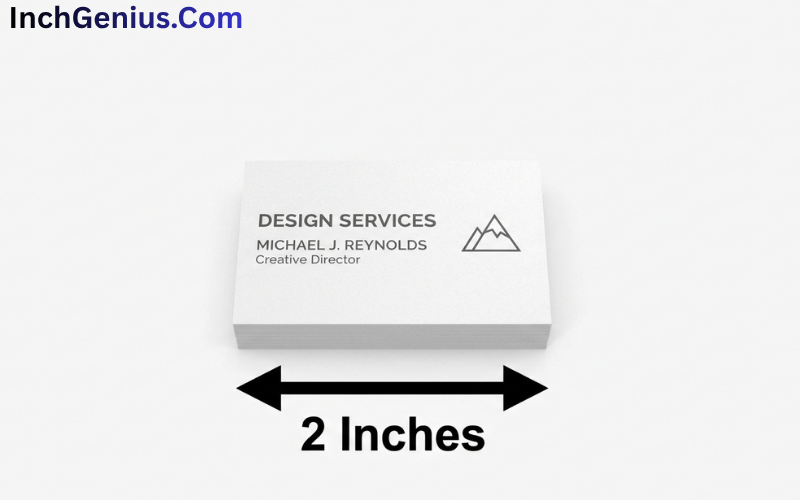
A standard US business card measures 3.5 inches by 2 inches. Its shorter edge is therefore exactly 2 inches in the nominal standard size. This makes the card a particularly useful comparison because it is flat, easy to handle, and simple to measure.
Business cards are used for professional contact information, networking, appointments, and small business promotion. To visualize 2 inches, place the card horizontally and focus only on its shorter side—not the longer 3.5-inch edge. Remember that business card sizes vary by country and printer, so this comparison applies specifically to the standard US format. It is one of the clearest ways to see what a two-inch measurement looks like.
Related Post:
3. A Two-Inch Drywall Screw
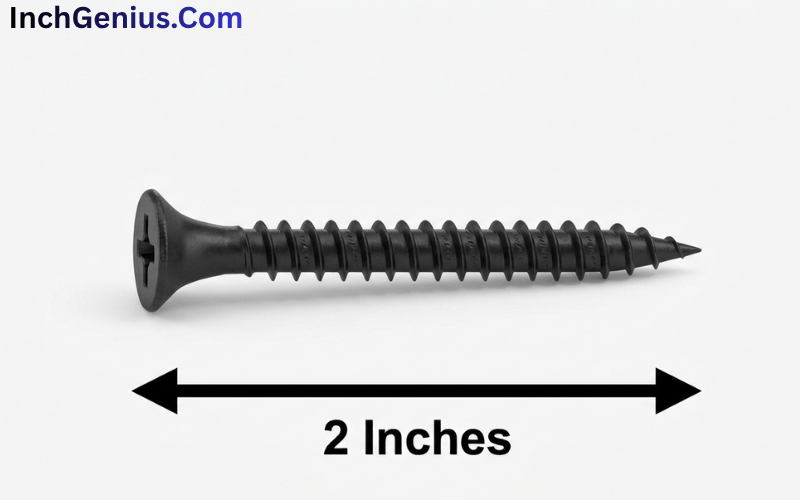
A drywall screw sold in a 2-inch size provides a direct example of an object with a specified length of 2 inches. These screws are used in construction and home improvement, particularly when fastening drywall to an appropriate framing material. Retailers list specific 2-inch drywall screw products, including different thread styles and screw gauges.
When using this example, measure along the screw’s length according to the manufacturer’s stated sizing convention. Do not assume that every screw used for drywall is 2 inches long; screws come in many different sizes. The advantage of this example is that you can choose a product specifically labeled 2 inches instead of estimating from a screw that merely looks close.
4. A Two-Inch-Wide Masking Tape
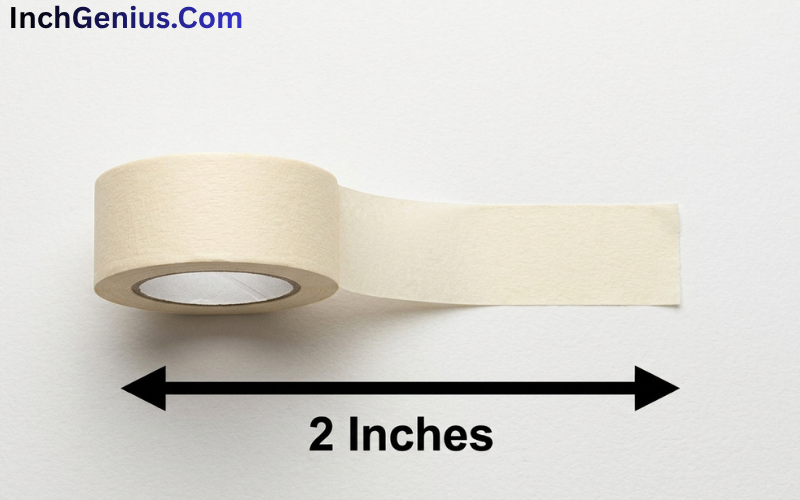
Masking tape is another practical reference, provided you focus on the tape’s width rather than the diameter of the roll. For example, 3M lists several masking tape products with a stated width of 2 inches, equivalent to approximately 50 millimeters. Source: 3M product specifications.
This type of tape is used for masking surfaces during painting and other finishing work. Pull out a short piece and measure across its width. That edge is designed to be 2 inches wide, even though the tape can extend for many yards in length. This example is useful because the specified dimension is clearly identified, unlike the outside diameter of a tape roll, which varies with how much tape remains.
Related Post:How Long is 5 Inches?
5. A Standard Bank Card’s Short Side
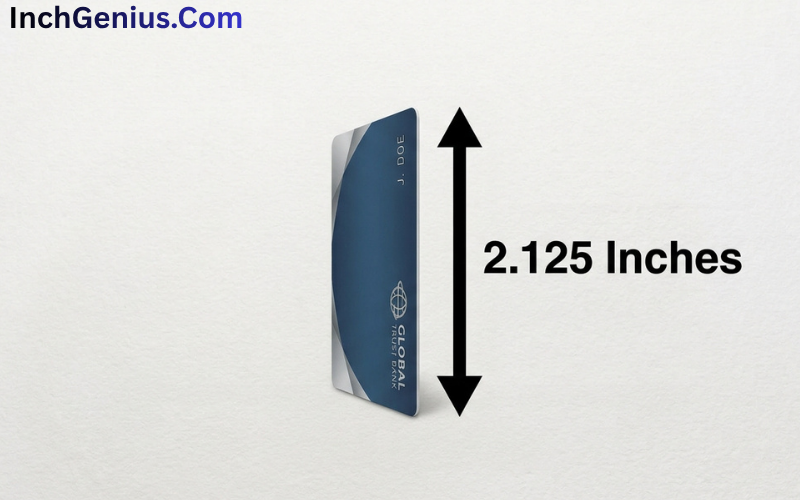
A typical bank card following the ID-1 card format measures 85.60 millimeters by 53.98 millimeters. The shorter dimension is approximately 2.125 inches, which is slightly greater than 2 inches. The International Organization for Standardization documents these nominal card dimensions in ISO/IEC 7810. Source: ISO card dimensions.
Bank cards are familiar objects, making them convenient for visual comparison. Place a card on a table and focus on its shorter edge. It is about one-eighth of an inch longer than 2 inches, so it should be treated as a close comparison rather than an exact match. This difference is important if you are using the measurement for a tight-fitting space or a project that requires accuracy.
6. Two US Quarter Coins Placed Side by Side
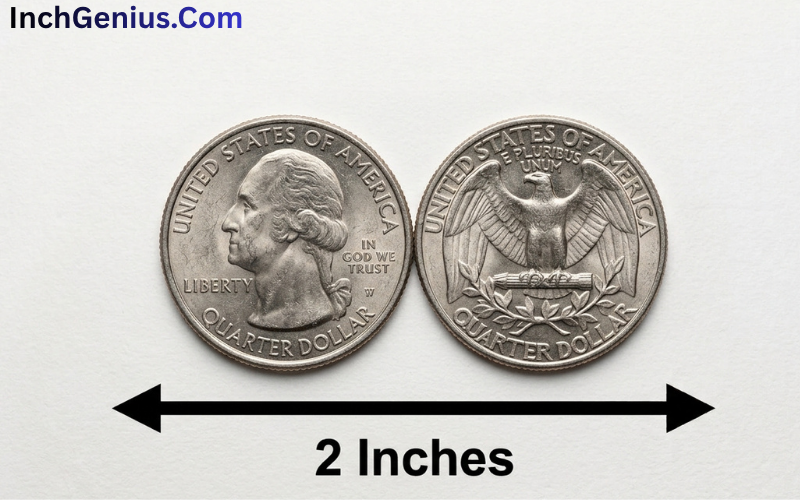
A US quarter has a diameter of 0.955 inches, according to the US Mint. When two quarters are placed side by side with their edges touching, their combined span is approximately 1.91 inches. Source: US Mint coin specifications.
This arrangement provides a helpful way to visualize a measurement that is slightly under 2 inches. It works best when both coins are placed in a straight line without overlapping. The total span is about 0.09 inch shorter than 2 inches, so it is not an exact measuring tool. Also, this example uses two objects together; a single quarter is less than 1 inch across.
7. A Two-Inch Putty Knife Blade
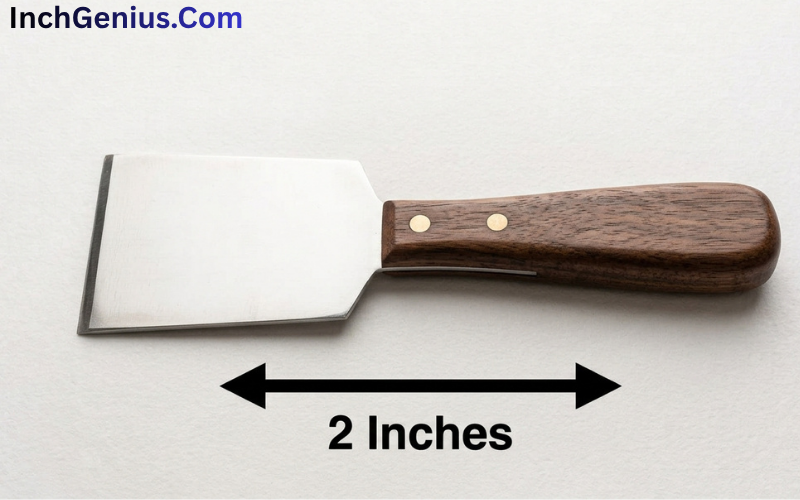
Putty knives are available with blades in different widths, including models marketed with a 2-inch blade. A two-inch blade width can help you visualize the measurement when the tool is placed flat on a work surface. Putty knives are commonly used to spread filler, apply putty, smooth small repairs, and remove loose material.
For this comparison, the important measurement is the blade’s width across its broad face, not the total length of the handle and blade. Different models have different proportions, so check the product’s stated blade width before using one as a reference. A specifically labeled 2-inch model is a better example than an unspecified putty knife.
8. A Two-Inch Paintbrush
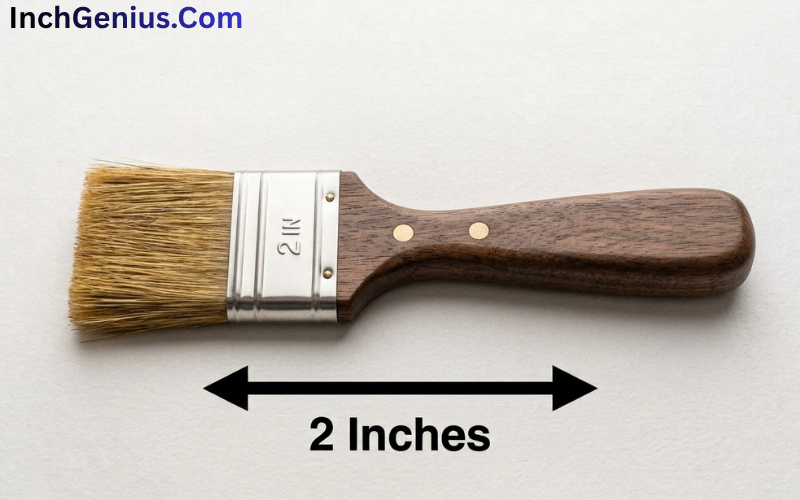
Paintbrushes come in a range of widths, and a brush sold as a 2-inch paintbrush is designed around a nominal two-inch brush width. This measurement generally refers to the width of the bristle area, rather than the length of the handle or the full height of the brush.
A two-inch paintbrush is useful for painting trim, edges, smaller wooden surfaces, and other areas where a very wide brush may be inconvenient. Lay the brush flat and look across the bristles to picture the width. Because handle lengths and head designs differ, do not use the whole brush as a two-inch-long object. Choose a model whose packaging or product specifications clearly state the two-inch brush size.
9. A Two-Inch Scraper Blade
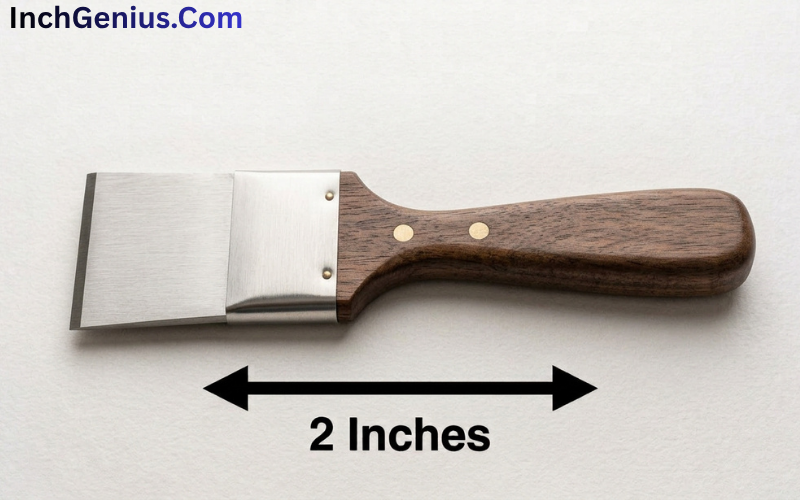
Small scrapers are manufactured in various blade widths, and a model specified as a 2-inch scraper gives you another practical comparison. These tools may be used for removing paint residue, adhesive, dried material, or other buildup from suitable surfaces. Their overall dimensions differ, so the blade width is the measurement that matters here.
To picture 2 inches, focus on the straight edge of a scraper with a clearly stated two-inch blade width. Do not measure from the handle’s end to the blade tip unless that is the dimension you actually need. A specific model’s measurements should always be checked before describing it as a verified two-inch example.
Related Post: How Long is 6 Inches?
10. A Two-Inch-Wide Craft Ribbon
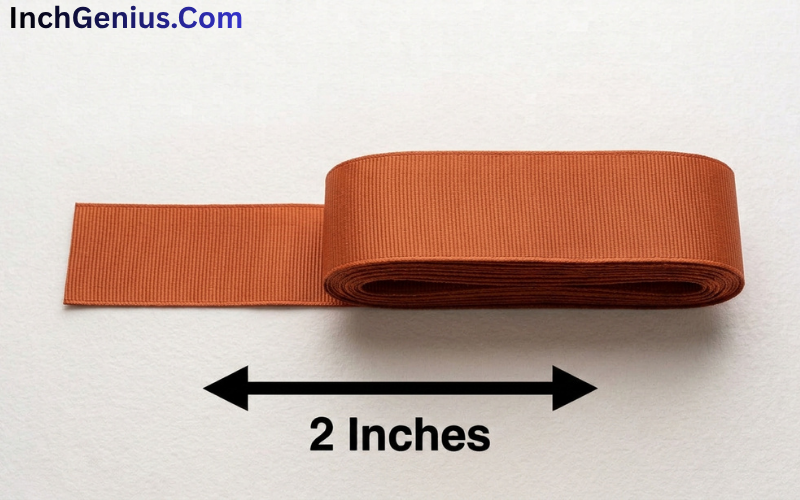
Craft ribbon is sold in many widths, including two-inch options. In this case, the measurement refers to the ribbon’s width from one edge to the other, not the length of ribbon wound around a spool. A roll can contain many feet of ribbon even though each strip is two inches wide.
Ribbon is used for gift wrapping, decorative bows, floral arrangements, sewing projects, and event decorations. Pull out a short section and lay it flat to see the two-inch width. Because ribbon comes in several sizes, a random piece should not be assumed to measure 2 inches. Select a product specifically labeled with a two-inch width to keep this comparison accurate.
11. A Two-Inch-Wide Hook-and-Loop Strip
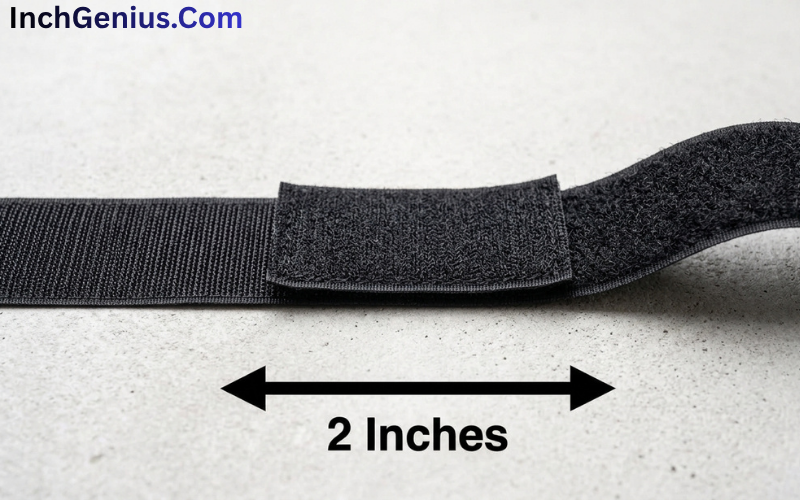
Hook-and-loop fastening material is used for securing removable panels, organizing cables, attaching fabric components, and many craft projects. Some products are sold in widths of 2 inches, making the width of a correctly specified strip a useful measurement reference.
To visualize the dimension, cut or unroll a short piece and measure straight across its width. The length of the strip may be several inches or feet, so it is important to identify which side is being discussed. Widths differ among brands and product types, meaning that only a strip specifically sold as two inches wide should be used for this example.
12. A Two-Inch-Square Craft Tile
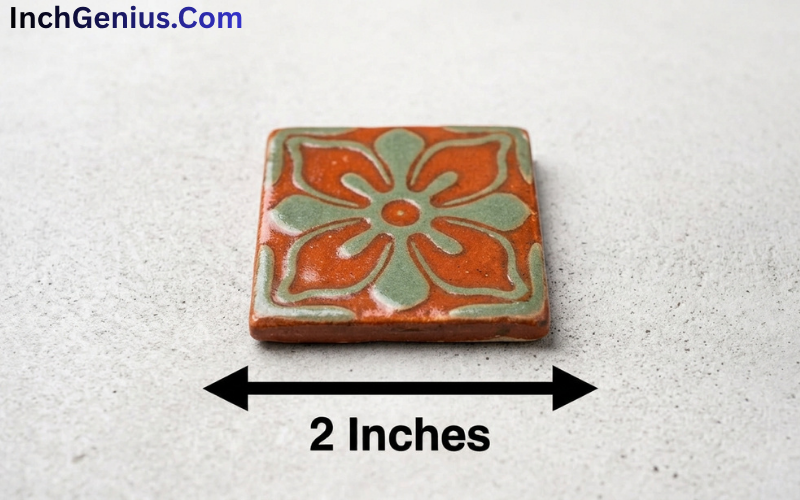
Small craft tiles and decorative pieces are available in different square sizes, including two-inch squares. A tile with sides measuring 2 inches provides a simple way to see the measurement in both horizontal and vertical directions.
Place the tile on a flat surface and examine one side. That edge represents 2 inches, while the tile’s area is 4 square inches if both sides are exactly 2 inches. Do not confuse the tile’s area with its length. Since decorative tiles are manufactured in many dimensions, choose a product that explicitly lists a two-inch side rather than assuming every small tile has this size.
13. A Two-Inch-Wide Elastic Band
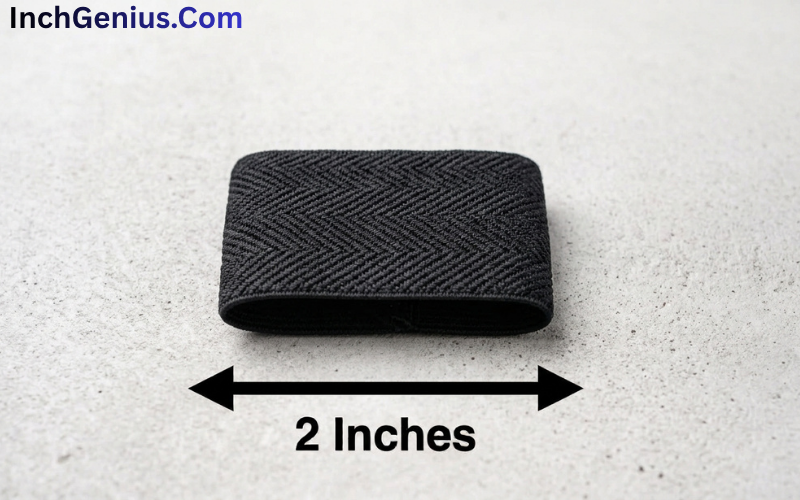
Elastic material is used in sewing, clothing, waistbands, craft projects, and fabric repairs. Some elastic products are manufactured in a nominal width of 2 inches. For these products, the width across the strip—not the length of the elastic when stretched—is the relevant measurement.
Lay the elastic flat without pulling it tight and measure across the material. Stretching can change its length and shape, which makes it a poor way to estimate a fixed dimension. Always check the stated width because elastic is available in many sizes. A two-inch-wide elastic strip is a useful visual reference when you need to understand the measurement in sewing or textile work.
14. A Two-Inch-Wide Adhesive Label
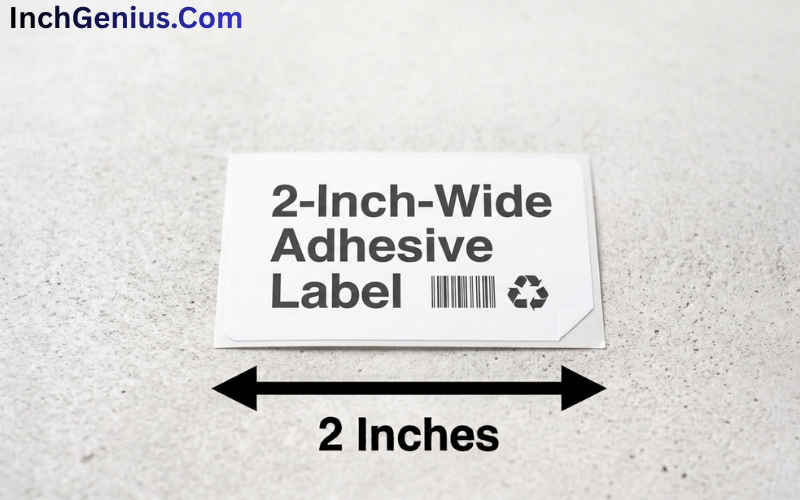
Adhesive labels are produced in numerous shapes and sizes, including labels with a width of 2 inches. A label’s dimensions may be written as width by height, so it is important to identify which side measures two inches.
For example, a label listed as 2 inches by 3 inches has one side measuring 2 inches and another measuring 3 inches. Place the label on a flat surface and compare its shorter edge with the target measurement if the product specifications identify that edge as two inches. Labels are used for storage containers, shipping, organization, product packaging, and office tasks. The exact dimensions depend on the selected label format.
15. A Two-Inch-Wide Strip of Paper
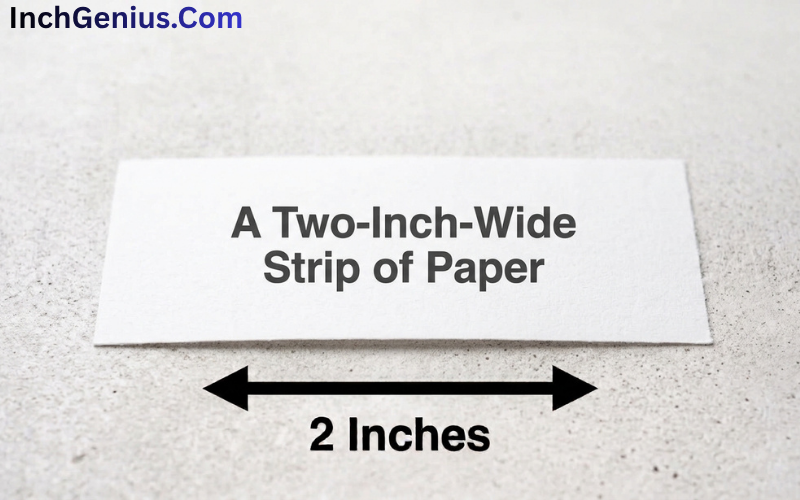
A strip of paper cut to a width of exactly 2 inches is one of the simplest ways to create a reliable visual reference at home. Unlike an unmeasured object, this example can be made to the exact size you need using a ruler and scissors.
Mark two inches across a sheet of paper, draw a straight line between the marks, and cut along it. The resulting strip will be two inches wide if the marks and cut are accurate. You can keep it beside your desk or in a toolbox as a quick reference. This is a deliberately measured example rather than a claim that ordinary paper strips come in a universal two-inch size.
Quick Comparison Table: Things That Measure About 2 Inches
| Object | Dimension to Check | Measurement |
| AA battery | Overall length | About 1.99 in |
| US business card | Short edge | 2 in |
| Drywall screw | Specified length | 2 in |
| Masking tape | Tape width | 2 in |
| ID-1 bank card | Short edge | About 2.125 in |
| Two US quarters | Combined span | About 1.91 in |
| Putty knife | Specified blade width | 2 in for selected models |
| Paintbrush | Specified brush width | 2 in for selected models |
| Scraper | Specified blade width | 2 in for selected models |
| Craft ribbon | Specified width | 2 in for selected products |
Important: The examples described as selected products are only valid when the particular item’s packaging or manufacturer’s specification confirms the stated size. Not every product in the same category measures 2 inches.
2 Inches Conversion Chart
Use this chart when you need to convert 2 inches into other common measurement units.
| Unit | Conversion |
| Inches | 2 |
| Centimeters | 5.08 |
| Millimeters | 50.8 |
| Feet | 0.1667 |
| Yards | 0.0556 |
| Meters | 0.0508 |
The conversion is straightforward: multiply inches by 2.54 to get centimeters, or by 25.4 to get millimeters. For example, 2 × 2.54 = 5.08 centimeters. These conversions are exact for the defined inch, although the physical size of an object used for comparison may vary.
How to Estimate 2 Inches Without a Ruler
If you do not have a ruler nearby, you can still make a rough comparison using an object whose dimensions you already know.
- Use a standard US business card: Its short edge is nominally 2 inches.
- Compare an AA battery: A typical battery is about 1.99 inches long.
- Use two US quarters side by side: Their combined span is about 1.91 inches.
- Check a labeled product: A two-inch-wide tape or brush can provide a direct reference if the stated dimension is confirmed.
- Make a paper reference: If you can measure once, cut a two-inch strip and keep it for later comparisons.
These methods are useful for everyday estimates, but they are not replacements for a ruler or caliper when precision matters. Do not rely on hand measurements alone for cutting materials, fitting parts, or other tasks where a small error could cause a problem.
Why Accurate Two-Inch Comparisons Matter
Knowing what 2 inches looks like can help when shopping online, selecting hardware, organizing small spaces, or working on DIY projects. Product photos often make objects appear larger or smaller depending on camera angle and surrounding items. A clearly stated dimension gives you a more reliable basis for comparison.
It is also important to distinguish between length, width, height, diameter, and thickness. A two-inch-wide strip is not necessarily two inches long, and a card with a short edge near two inches is not a two-inch square. Identifying the exact dimension prevents misleading comparisons and helps you choose the right product.
Frequently Asked Questions
How many centimeters is 2 inches?
Two inches equals exactly 5.08 centimeters, or 50.8 millimeters.
Is 2 inches the same as 5 centimeters?
Not exactly. Five centimeters equals approximately 1.97 inches, so 2 inches is 0.08 centimeter longer.
What everyday object is closest to 2 inches long?
A standard AA battery is a useful near-exact example because its typical length is approximately 1.99 inches. A standard US business card’s short edge is nominally exactly 2 inches.
Is a bank card exactly 2 inches wide?
No. A standard ID-1 bank card measures approximately 2.125 inches along its shorter side. It is a little larger than 2 inches.
Can I measure 2 inches with coins?
Two US quarters placed side by side span about 1.91 inches. This is a useful estimate but is not an exact two-inch measurement.
How can I check whether an object is really 2 inches?
Use a ruler, tape measure, or suitable measuring tool. For a purchased item, check the manufacturer’s specifications and confirm whether the listed dimension refers to its length, width, height, or diameter.
Why do some objects described as 2 inches look different in size?
The measurement may refer to a different part of the object. A tape can be two inches wide but many yards long, while a card can have one edge close to two inches and a longer edge measuring 3.5 inches.
Conclusion
Two inches equals 5.08 centimeters, a small measurement that becomes easier to picture when you connect it to objects with known dimensions. A standard US business card’s short edge is a particularly clear reference, while a typical AA battery is almost exactly 2 inches long. Two quarters side by side offer another close comparison.
For the most reliable results, pay attention to the specific dimension being measured. Check whether the number refers to length, width, height, or diameter, and verify product sizes before using them for precision work. With these comparisons and the conversion chart, you can visualize 2 inches more confidently and avoid relying on guesses.